20170702 Burwash, Cumulonimbus, skippers

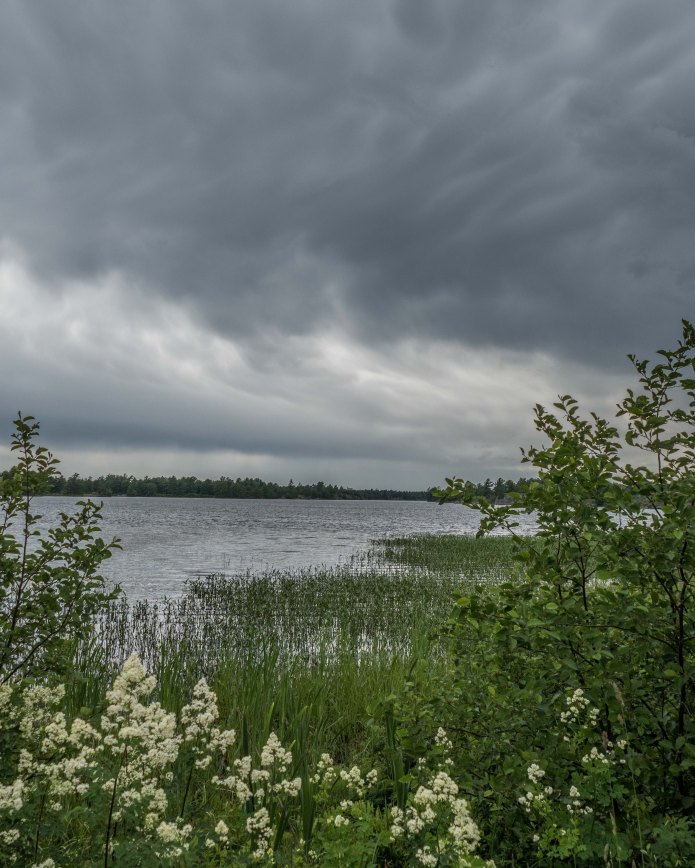
Photo:  Distant storm scene, seen from  Burwash

We made a brief trip to Burwash as it looked like a storm was brewing up there, half way to Sudbury.  No storm but we found some other scenes in our short trip …

Some cumulonimbus clouds up to the northeast, probably dropping some showers east of Sudbury….

Moth that I can’t find in the authoritative Selected Moths from Ontario Canada.

Upside down Monarch larva chomping on a leaf in the rain …

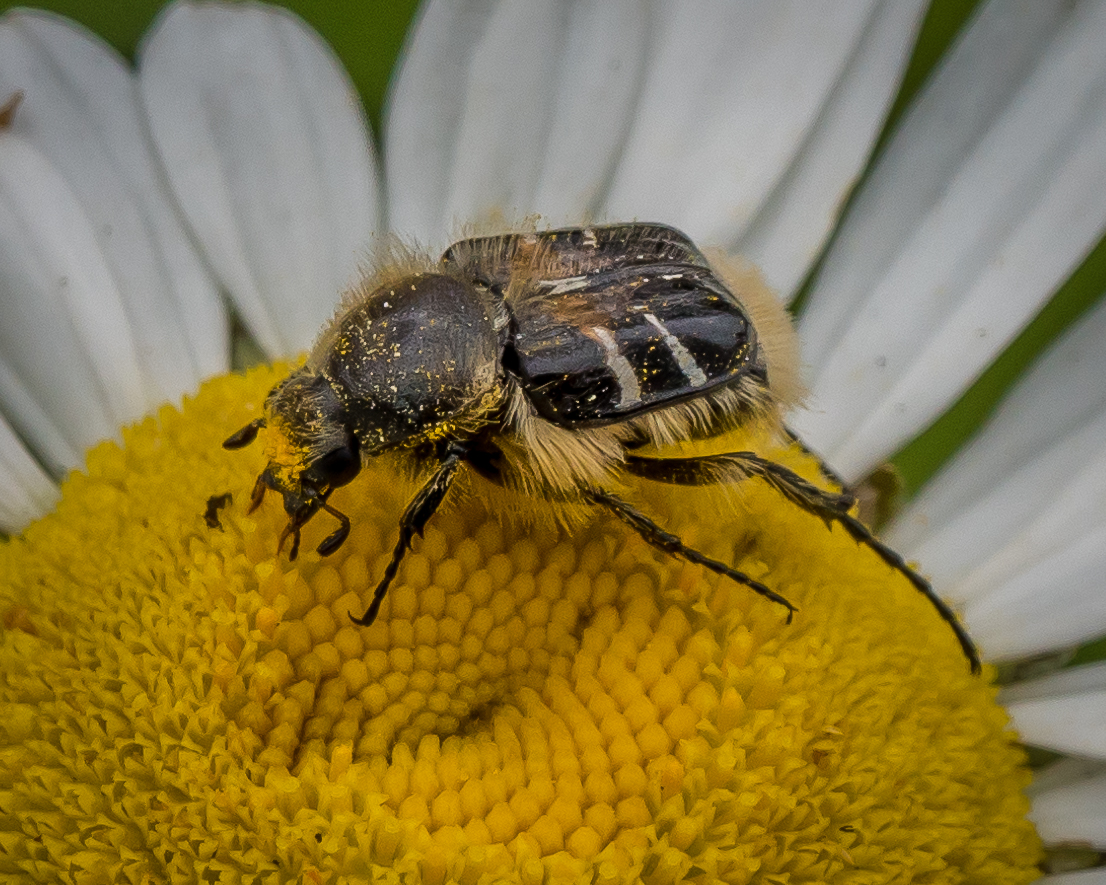
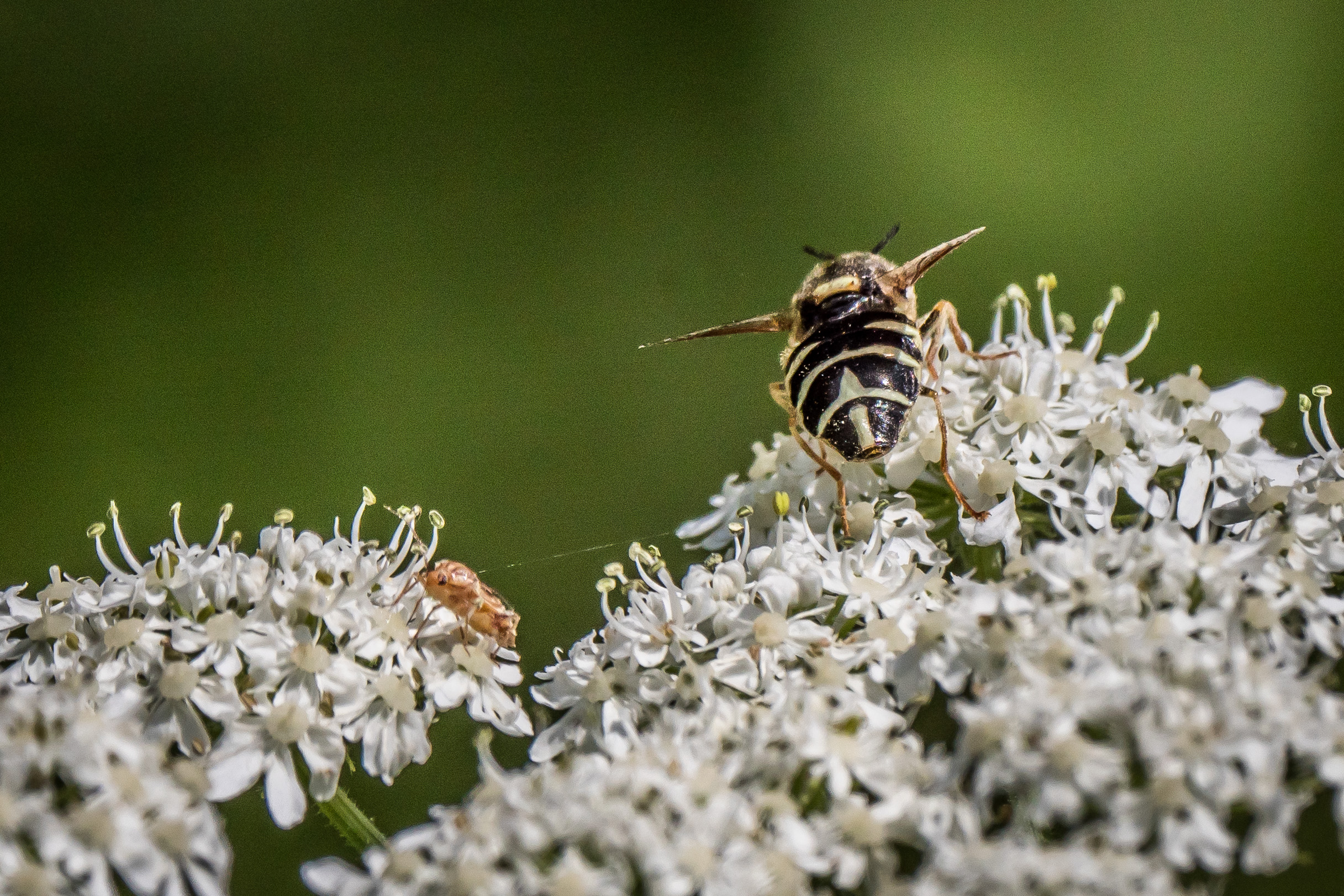
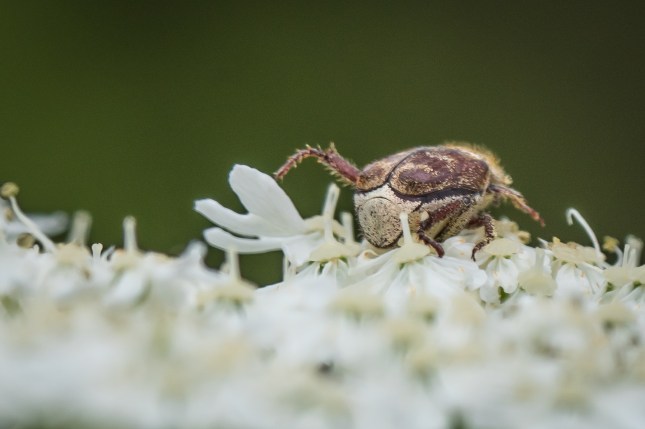
Bee-mimic Flower Beetle gathering nectar and pollen from an OED.

European Skipper with visitor …

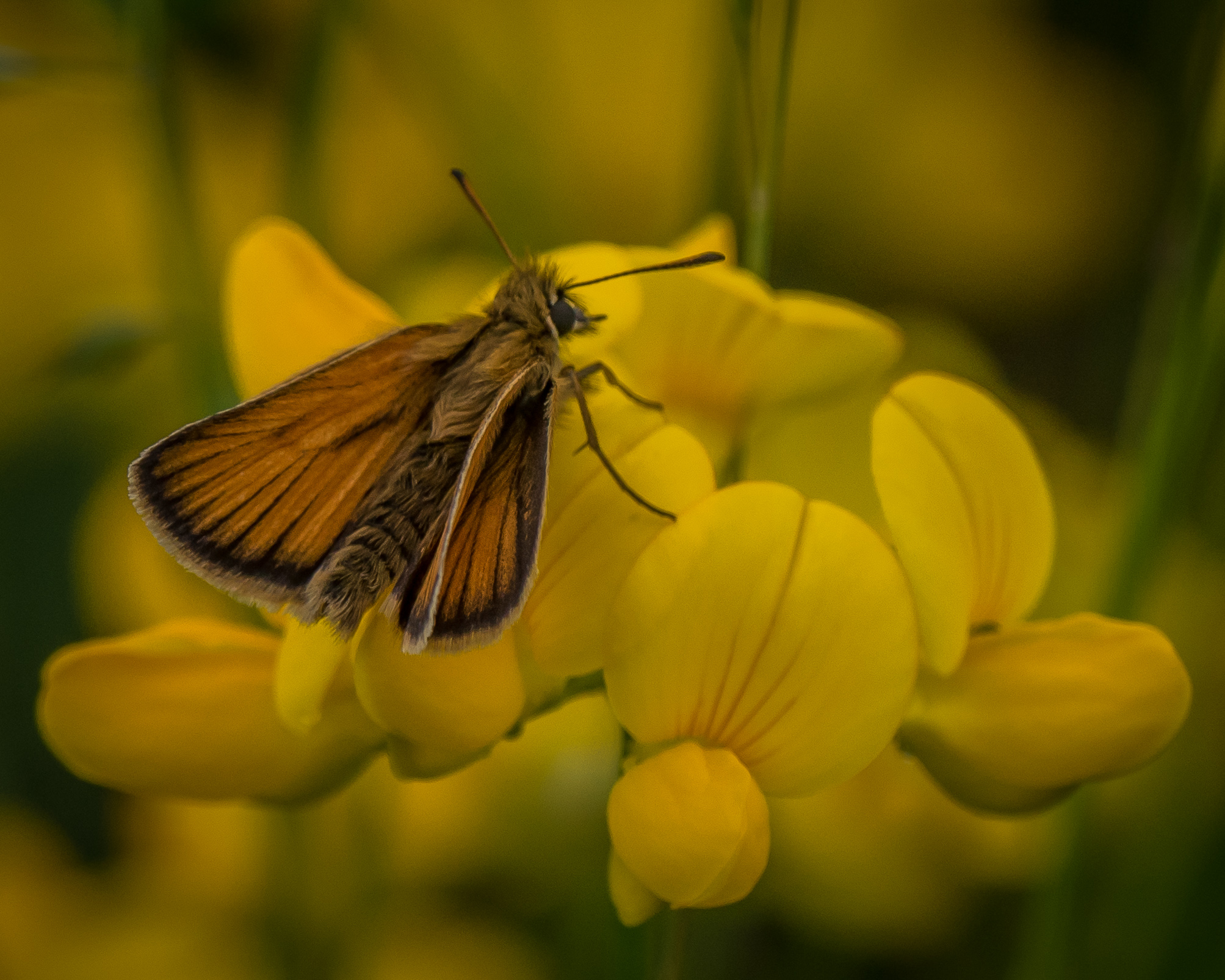
European Skippers also like Birdsfoot Trefoil nectar.

I think that this might be a skipper of some sort but cannot find a good ID — yet.

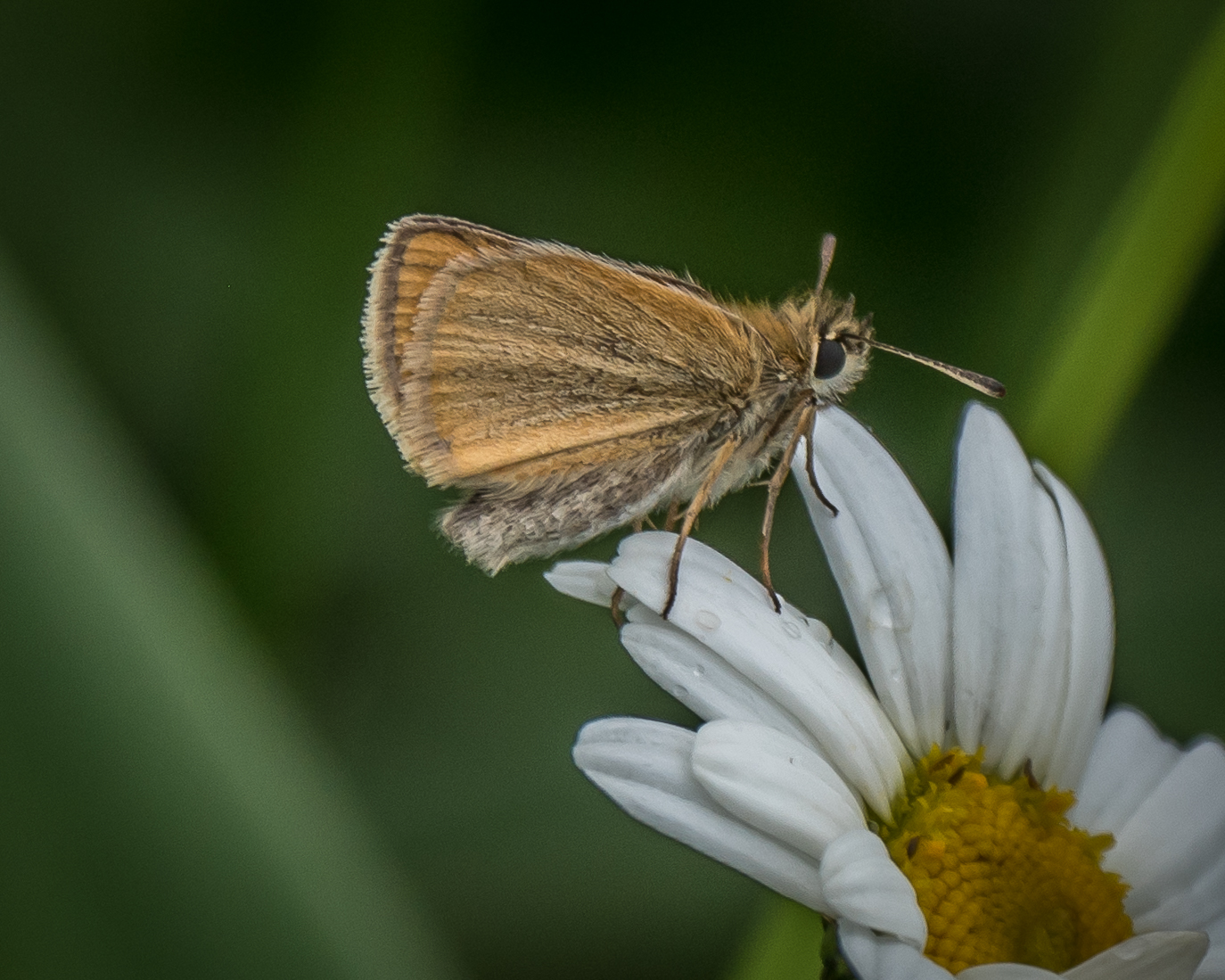
This small skipper looks like a Tawny Edged Skipper

The long antennae indicate a katydid, bush cricket or long horned grasshopper.  It looks like the photo in the wikipedia article about Tettigoniidae.  Further investigation showed similar looking Grey Bush Crickets but they are all in the south shores of the UK.

Nice stormy clouds…

Three buddies enjoying the afternoon sun after the rain showers.

The best butterfly book I have is the ROM Field Guide to Butterflies of Ontario.

I use it when I cannot ID a critter on-line using Rick Cavasin’s Butterflies of Ontario or the City of Toronto’s downloadable gem: Butterflies of Toronto.

And, if you’d enjoy a bit of entertaining writing try this:  From Foxtrot to Technobot.

20170630 Hoverfly, Bombus tenarius, European Skipper, Peck’s Skipper, Dun Skipper, Thread-waisted Wasp, Ambush spiders, Bee-mimic Flower Beetle, Pitcher Plant

Photo:  Big Lake from Highway 529

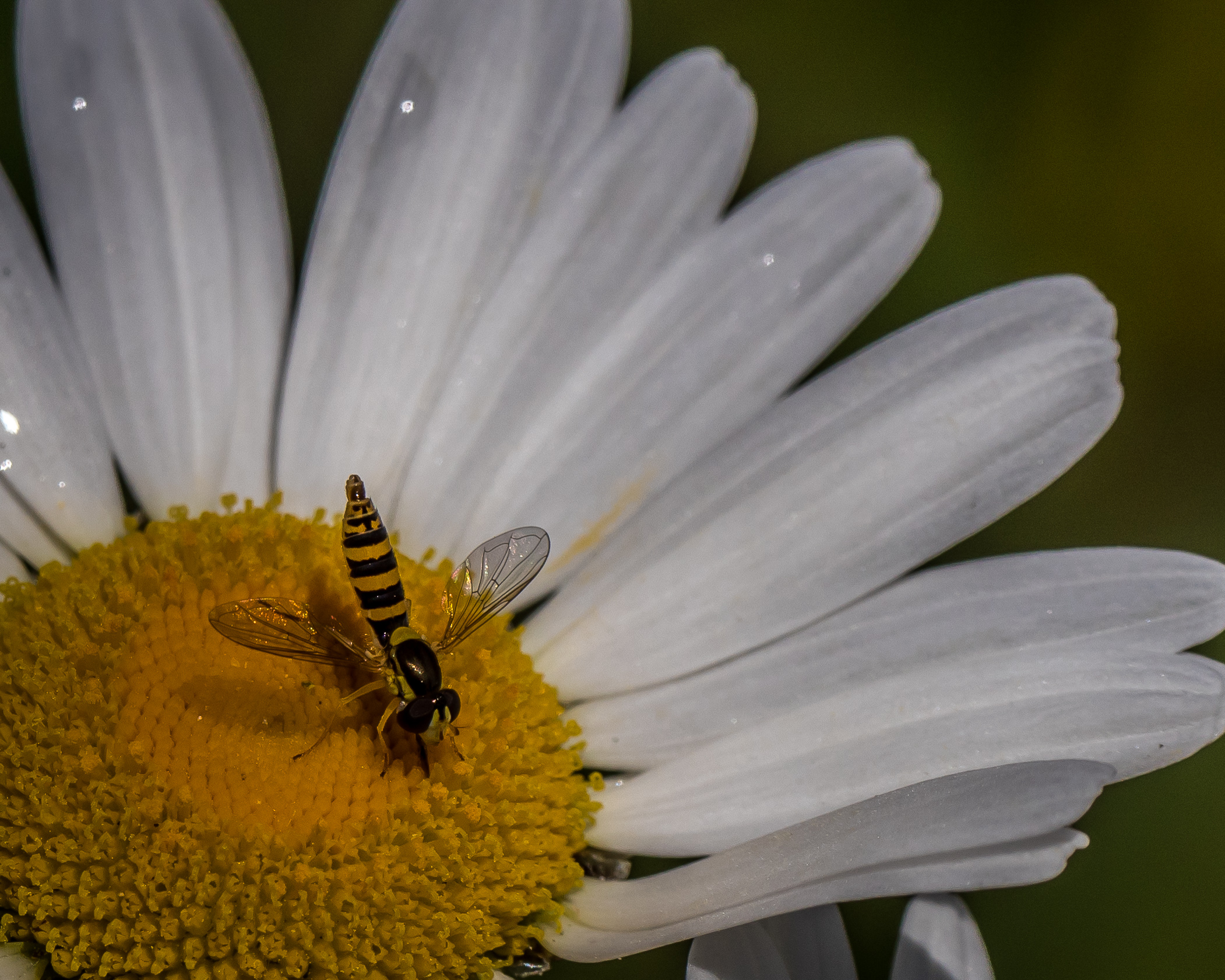
End of June saw increased activity of pollinators, especially hoverflies who are also known as flower flies or syrphid flies.   If I stop and look at a fresh Ox Eye daisy I’ll usually see a variety of bees and hoverflies visiting to collect nectar and pollen from the center yellow portion.  The insect family Syrphidae has over 800 species in North America. They perform a huge role as pollinators and recent studies have shown that many species’ larvae are effective  in preying on garden pests such as aphids.  No wonder organic gardeners are delighted to see hoverflies.   Although many species mimic bees, wasps and other biting/stinging insects, hoverflies are harmless.  This downloadable Key to the Genera of Nearctic Syrphidae is a wonderfully illustrated and written key to identifying hoverflies … at least down to the Genus level.  I just found it and will be using it as time permits, keeping in mind that IDing insects at the species level can be a very time consuming thing, especially since the taxonomies are constantly, like most science, changing.

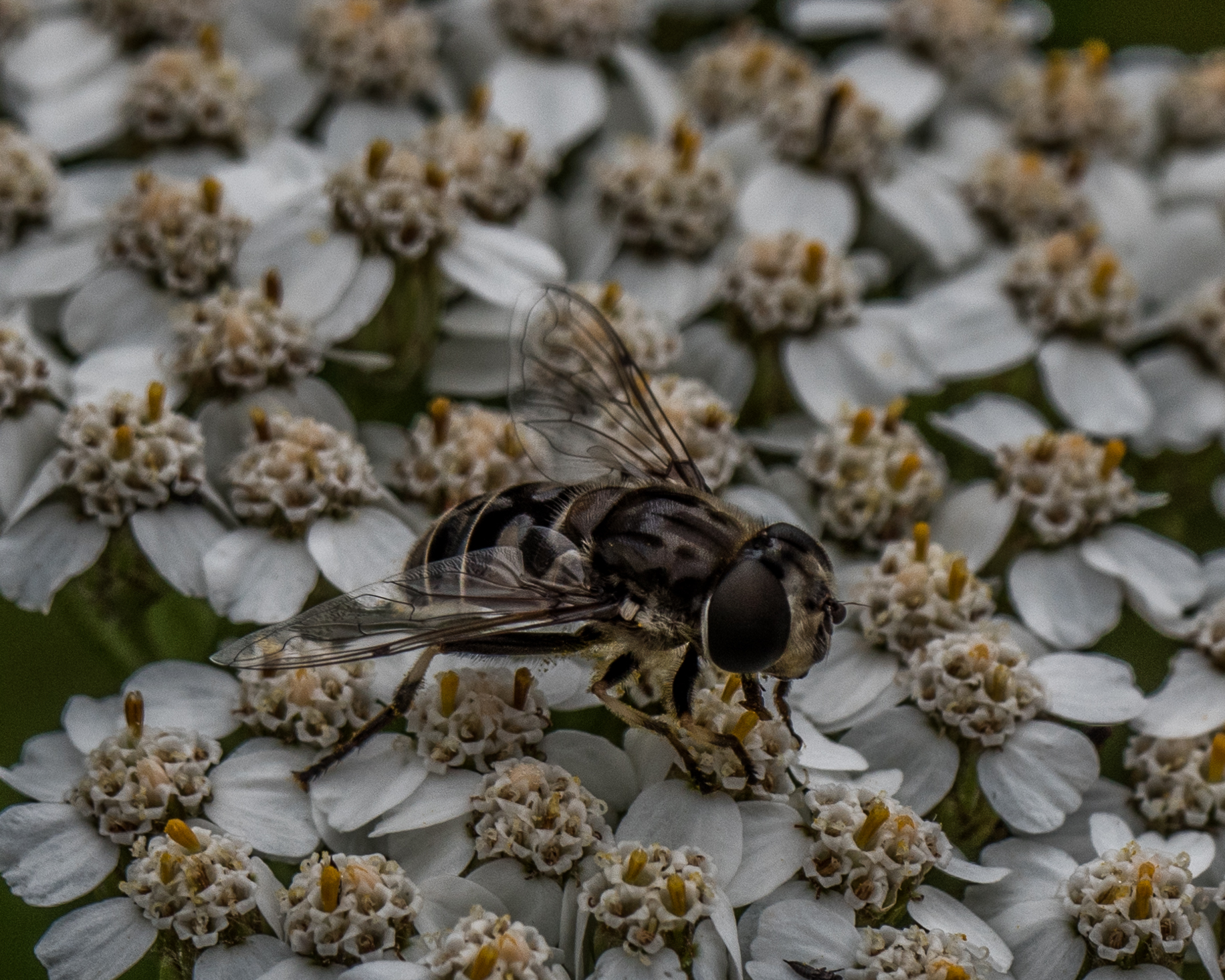
In the meantime here are a couple of pix of a hoverfly, Eristalis  spp(?), I think, nectaring (and pollinating) Common Yarrow.


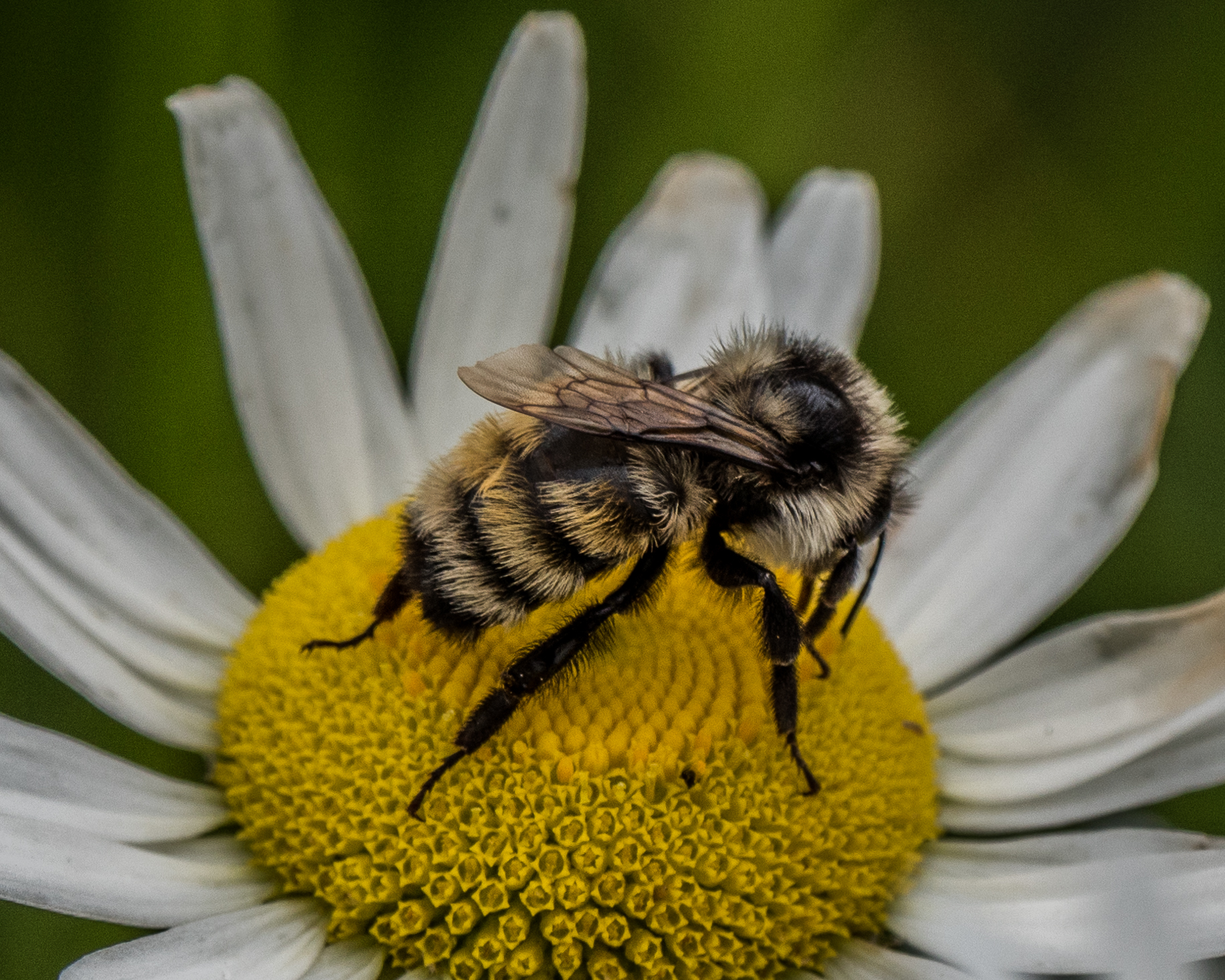
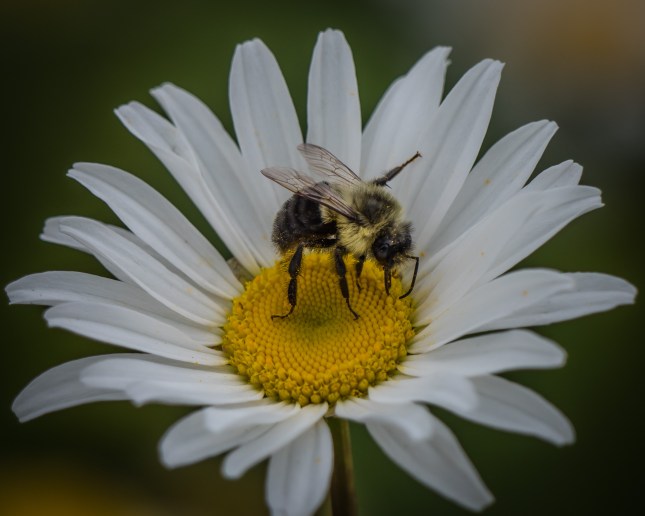
This looks like an Orange Belted Bumblebee, Bombus ternarius ,collecting nectar from the florets of an Ox Eye Daisy.  Click on the image to enlarge it and check out the arrangement of the florets at the bottom of the photograph.

See Joe Bartok’s Brief Primer on ‘Aster’ology  to see how this inflorescence is organized.  Bartok’s web site is very good.

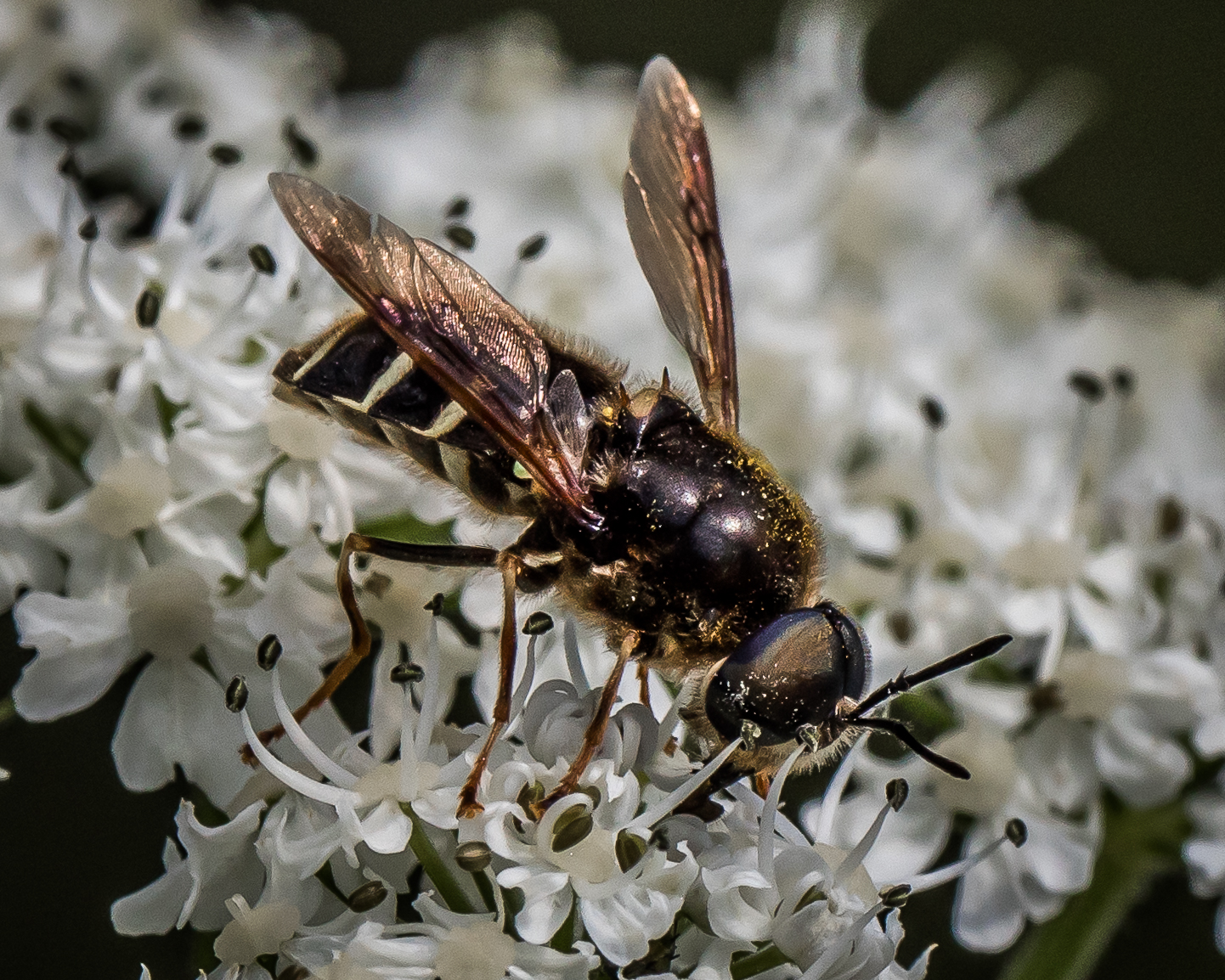
Another hoverfly of a different sort …

This European Skipper is feasting on nectar before going back to its common habitat — hayfields.
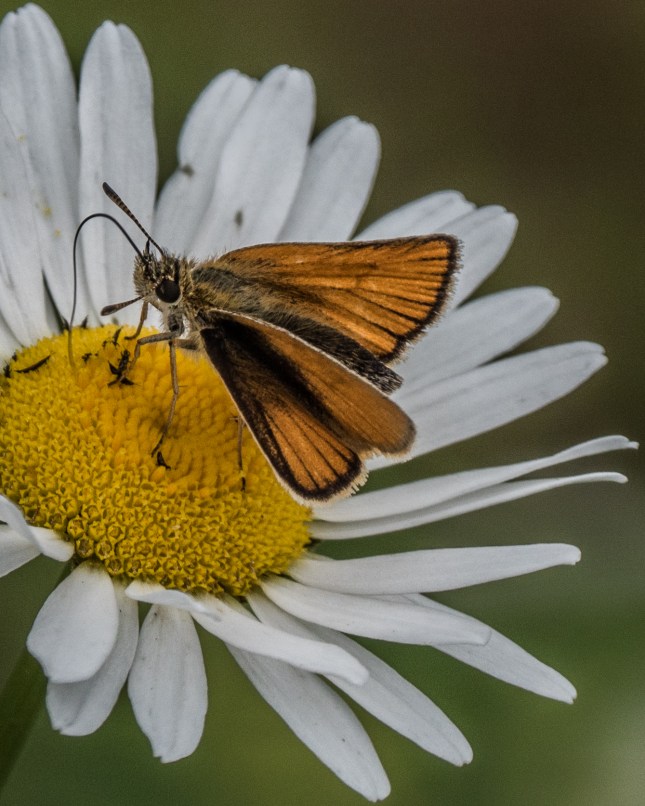
Peck’s Skipper on a leaf of a Spreading Dogbane, a relative of the Common Milkweed.
A break from all these bugs:

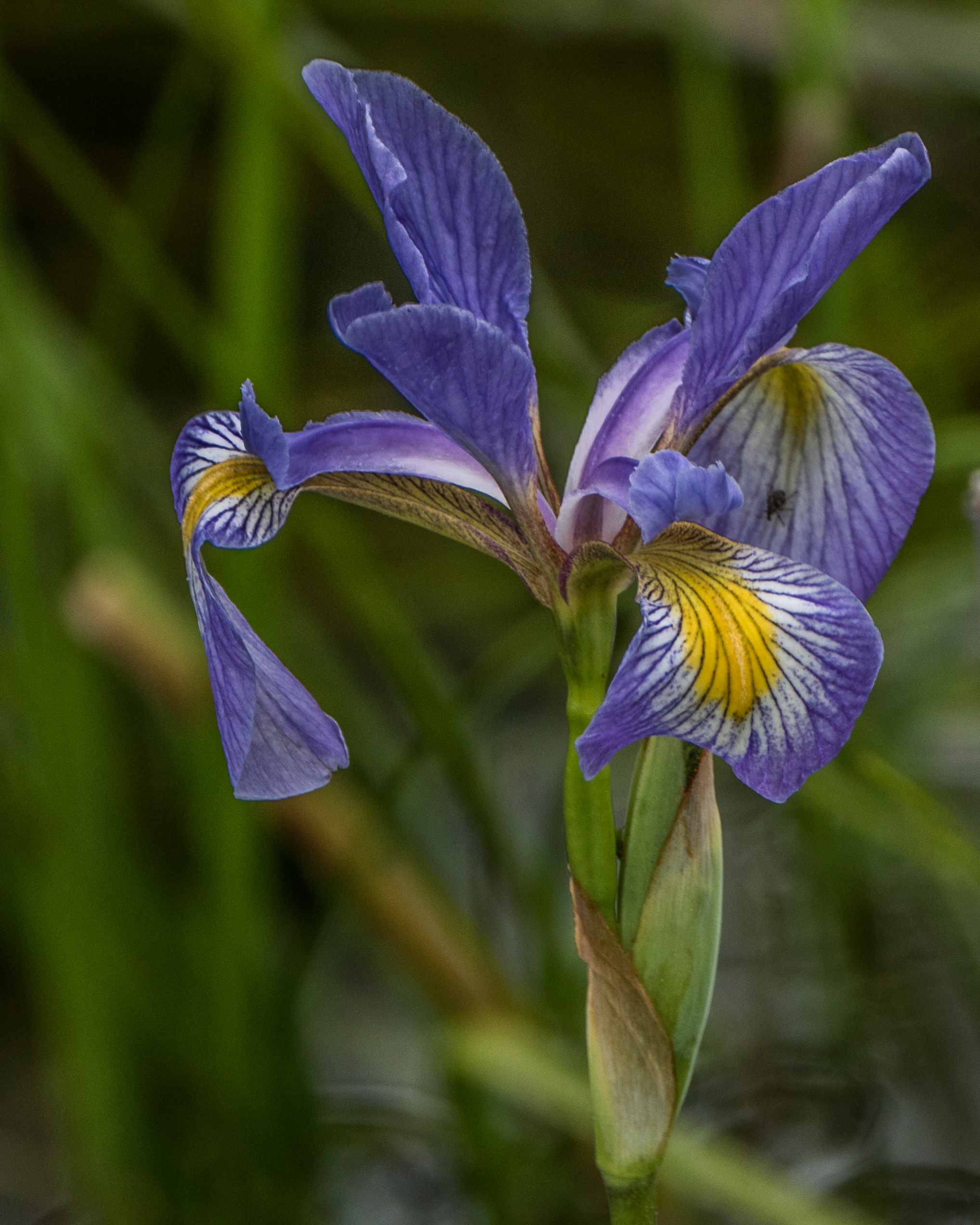
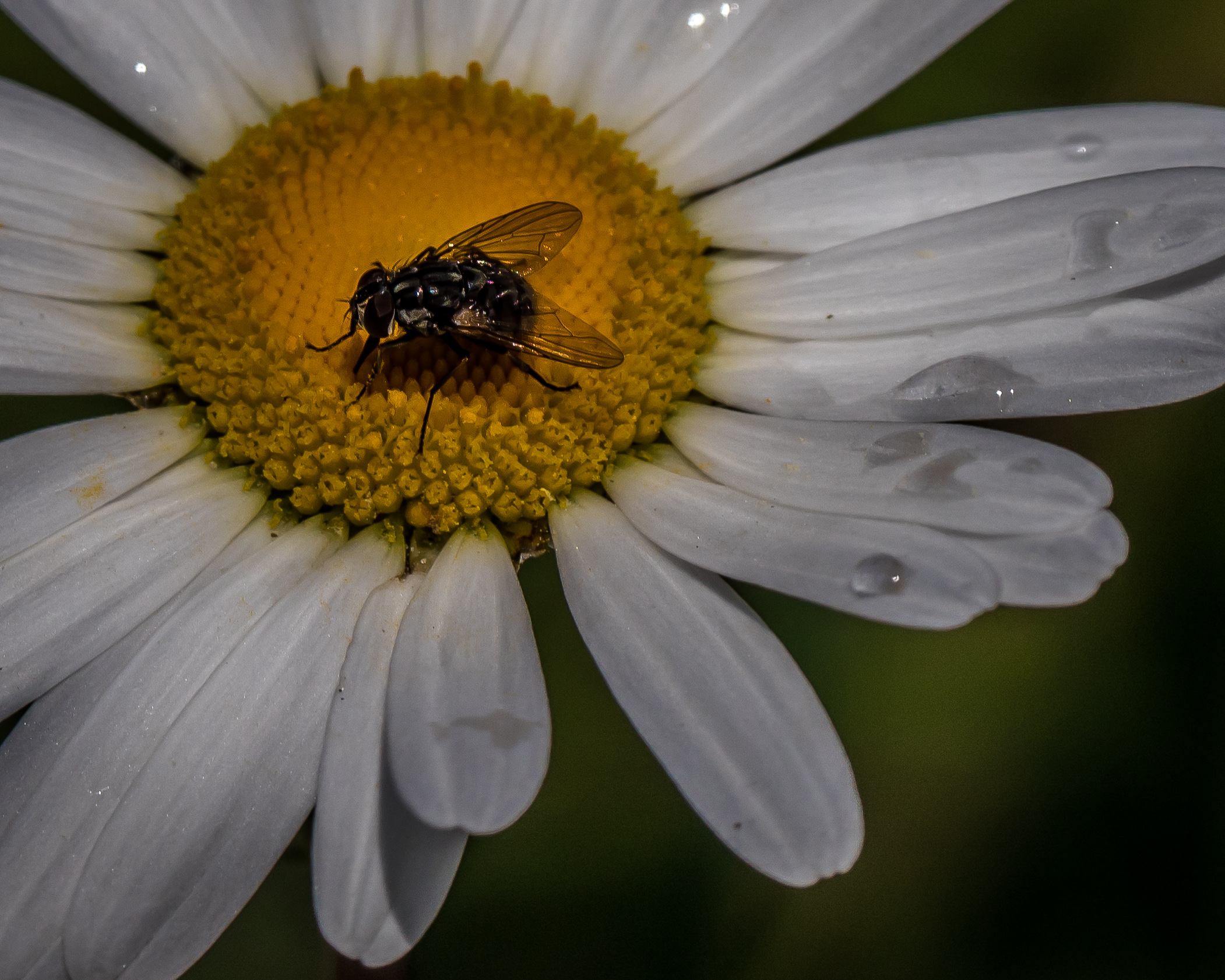
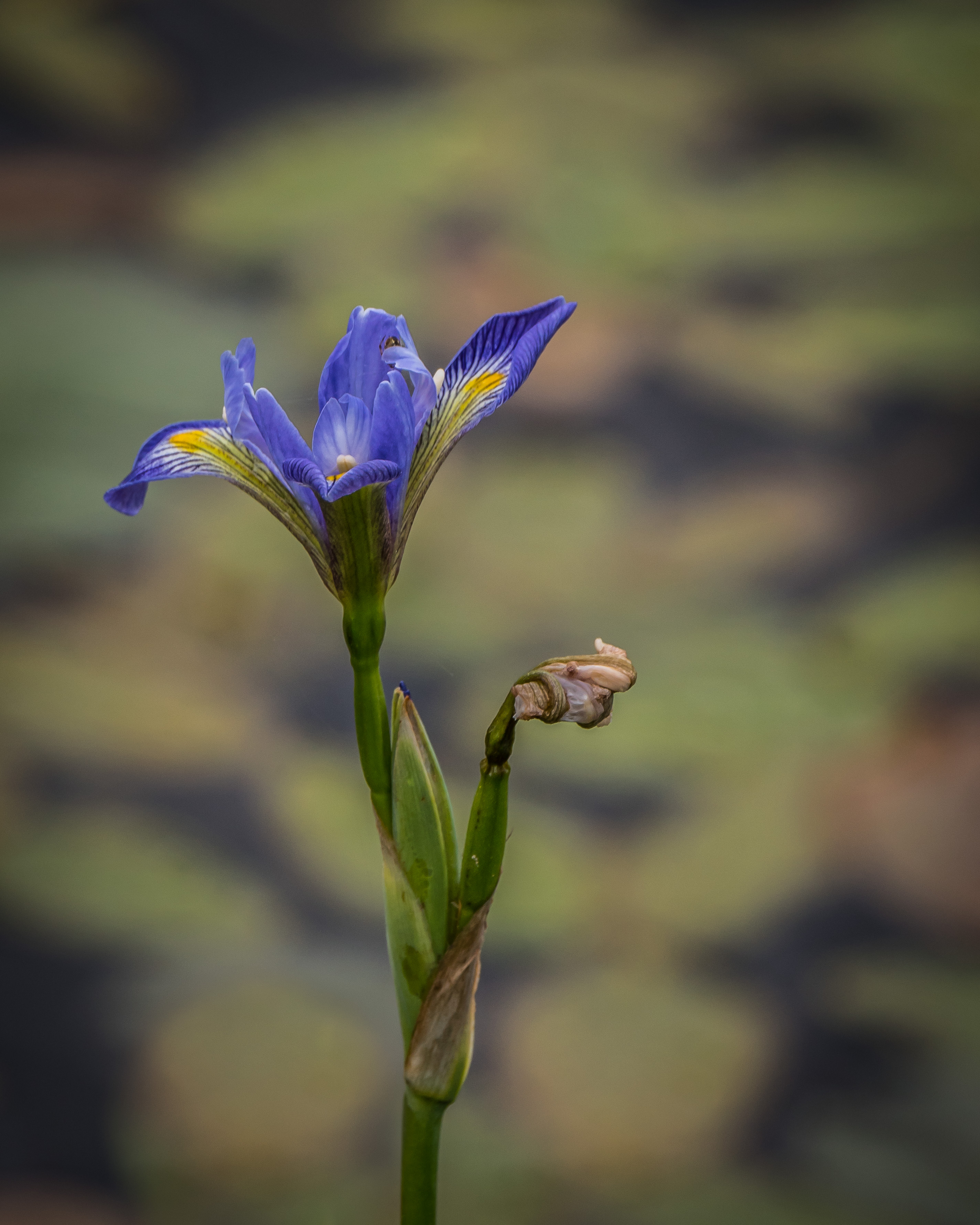
Did you see the fly on the iris above?!  There is no escaping them!

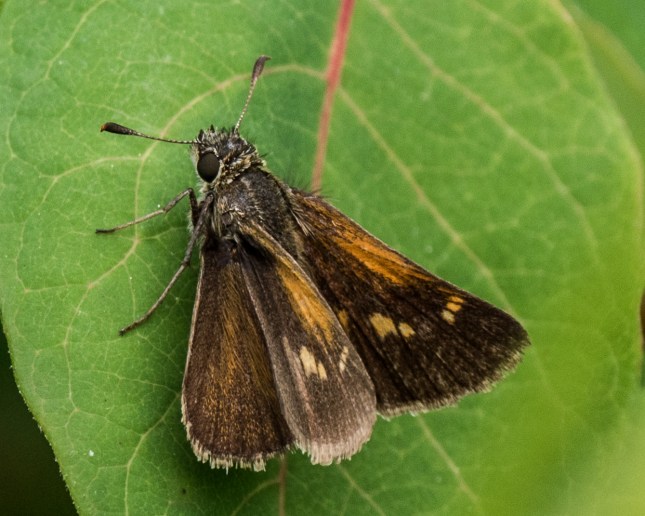
I think that this Dun Skipper is one of the Three Witches —“3 small, dark, difficult-to-separate skippers that fly at the same time in similar habitats.”  The other two are Little Glassy Wing and Northern Broken Dash.  Here is Rick Cavasin’s photos of the Dun Skipper.


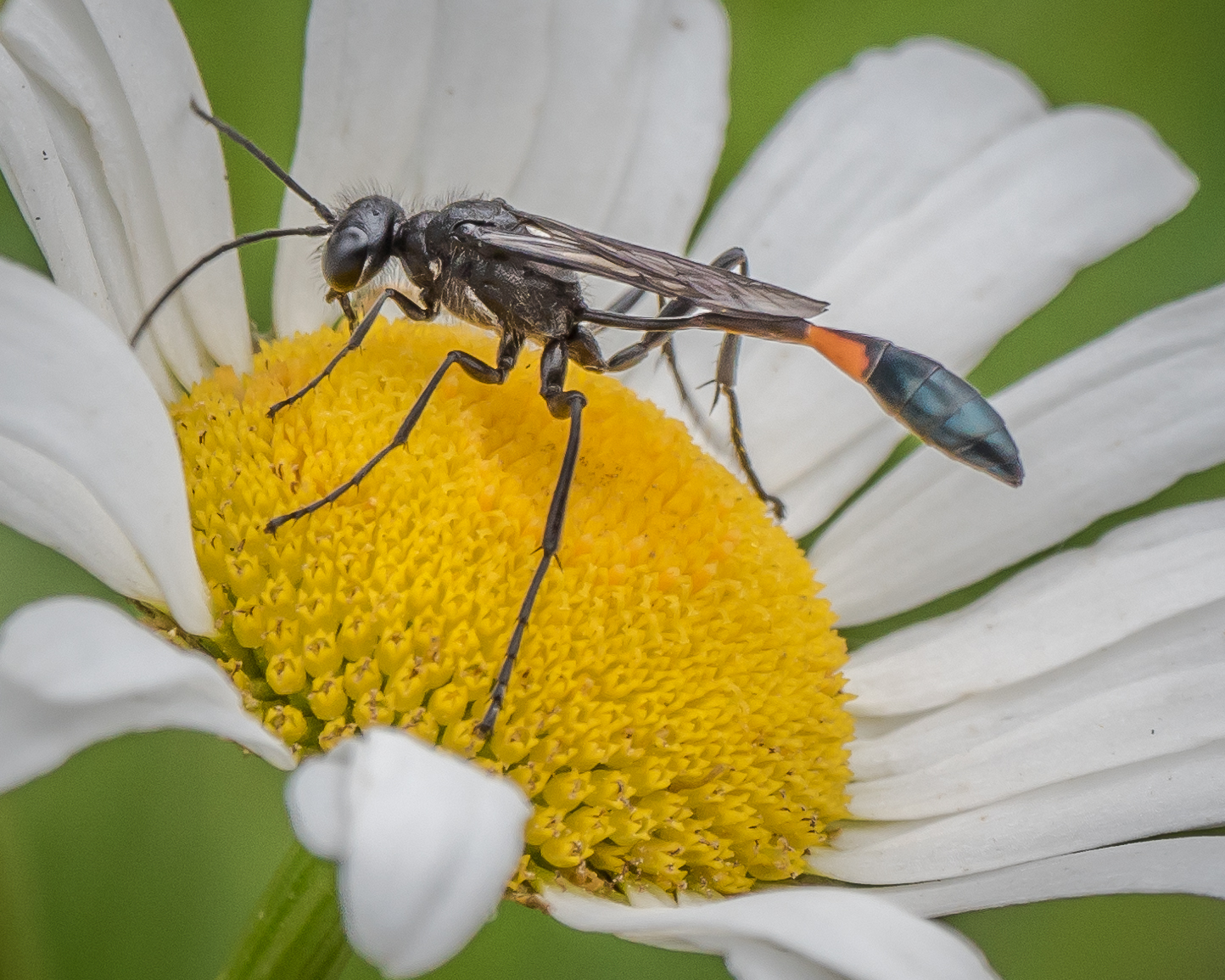
A Thread-waisted Wasp:    (I think that it is an Ammophilia)
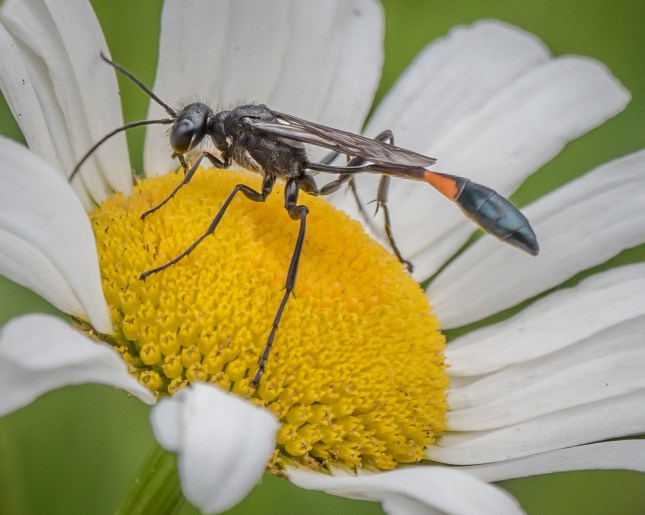
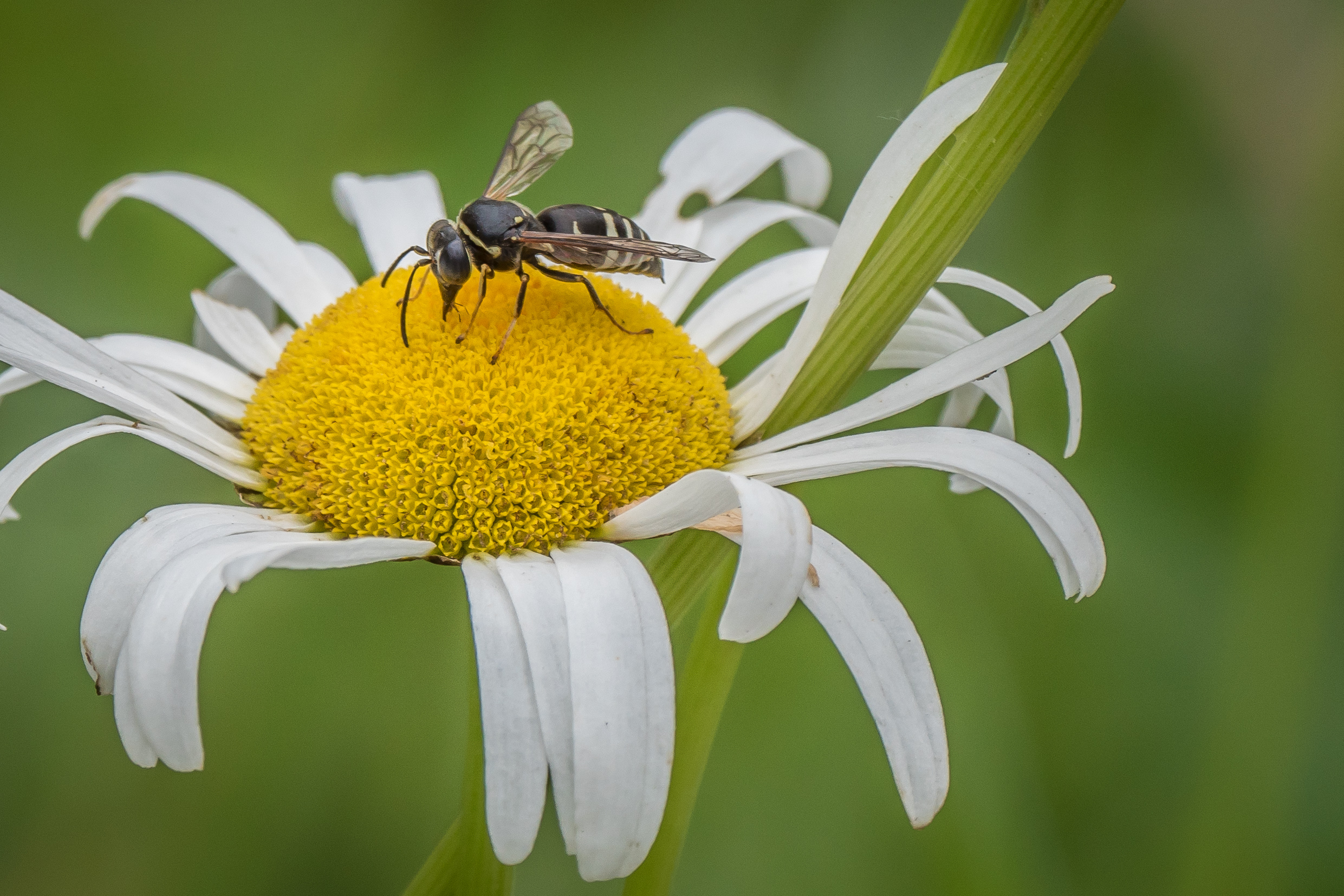
This might be a Potter (or Mason) Wasp on the OED.

Looks like the common Apis mellifera to me, on Viper’s Bugloss …

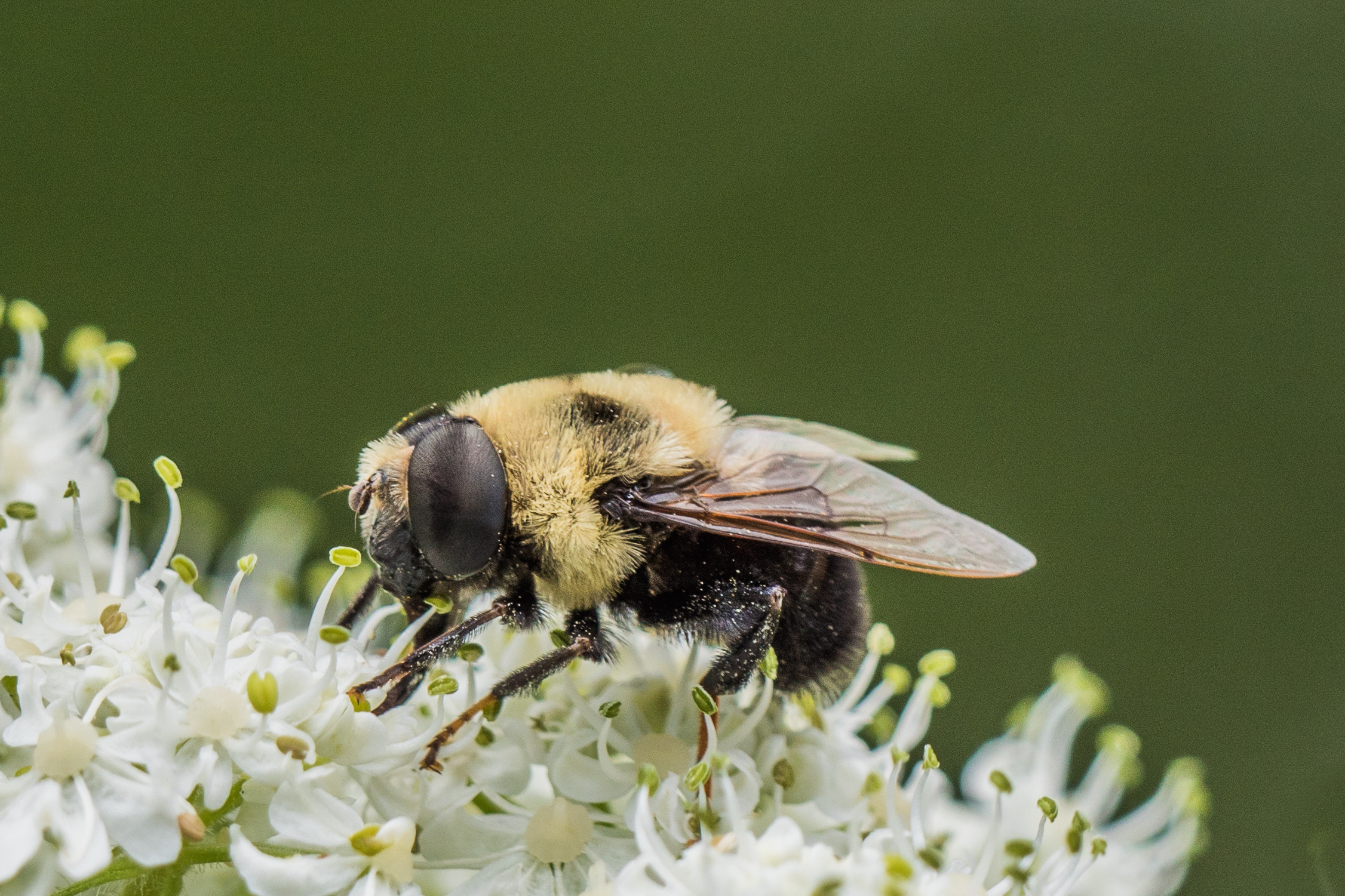
One of the “Beeflies” of Ontario, methinks.
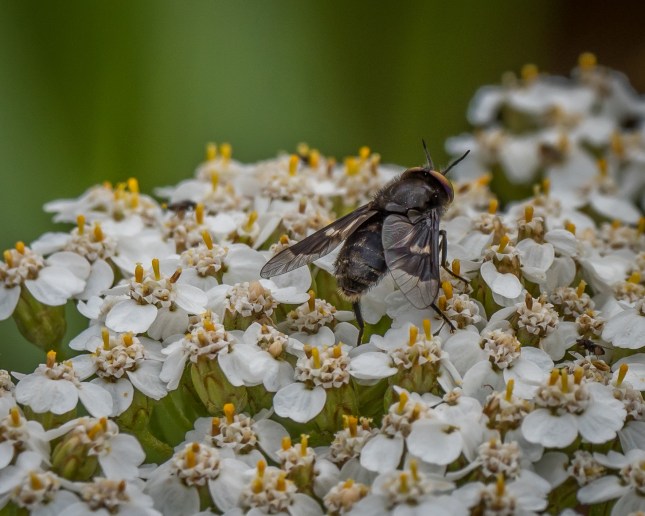
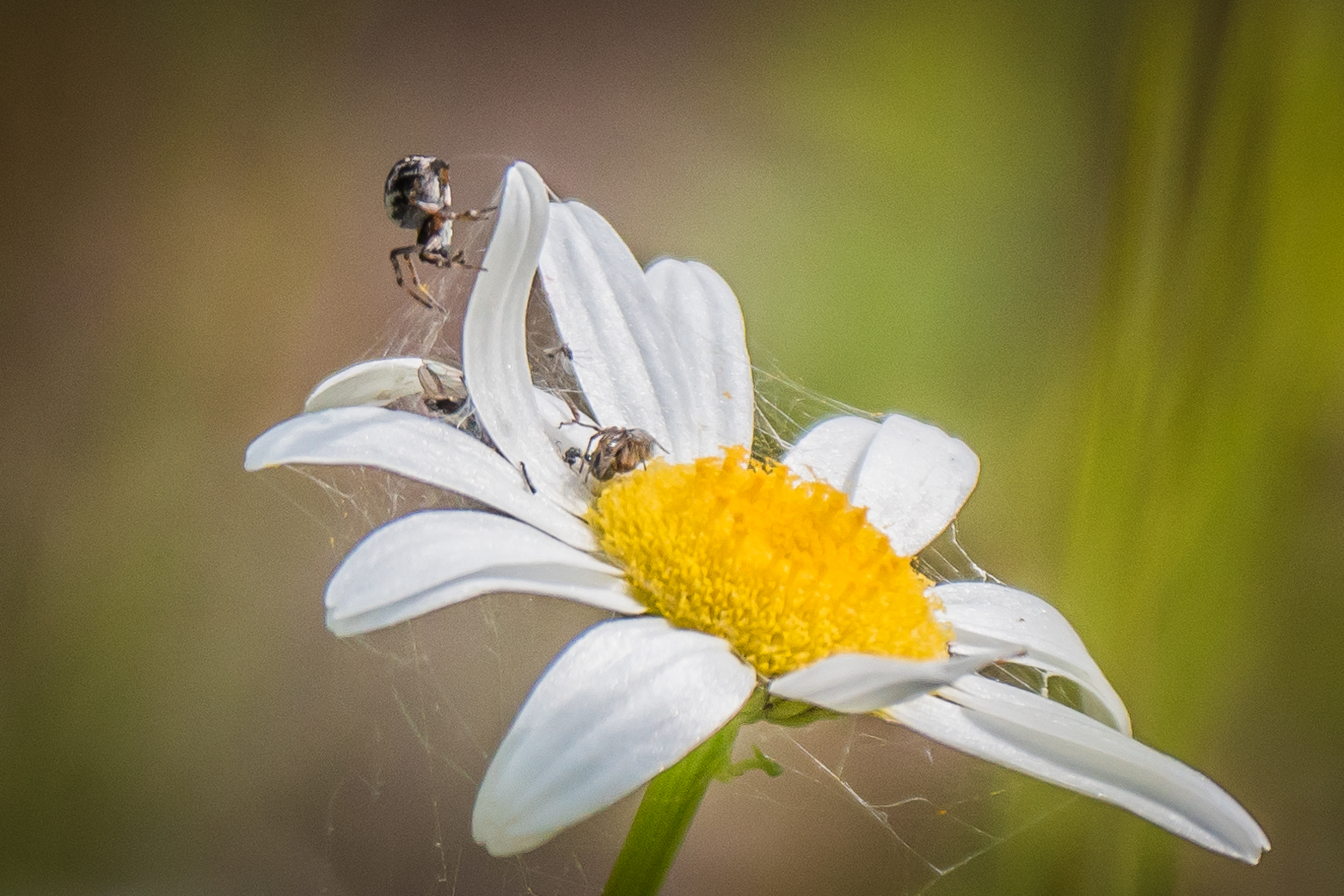
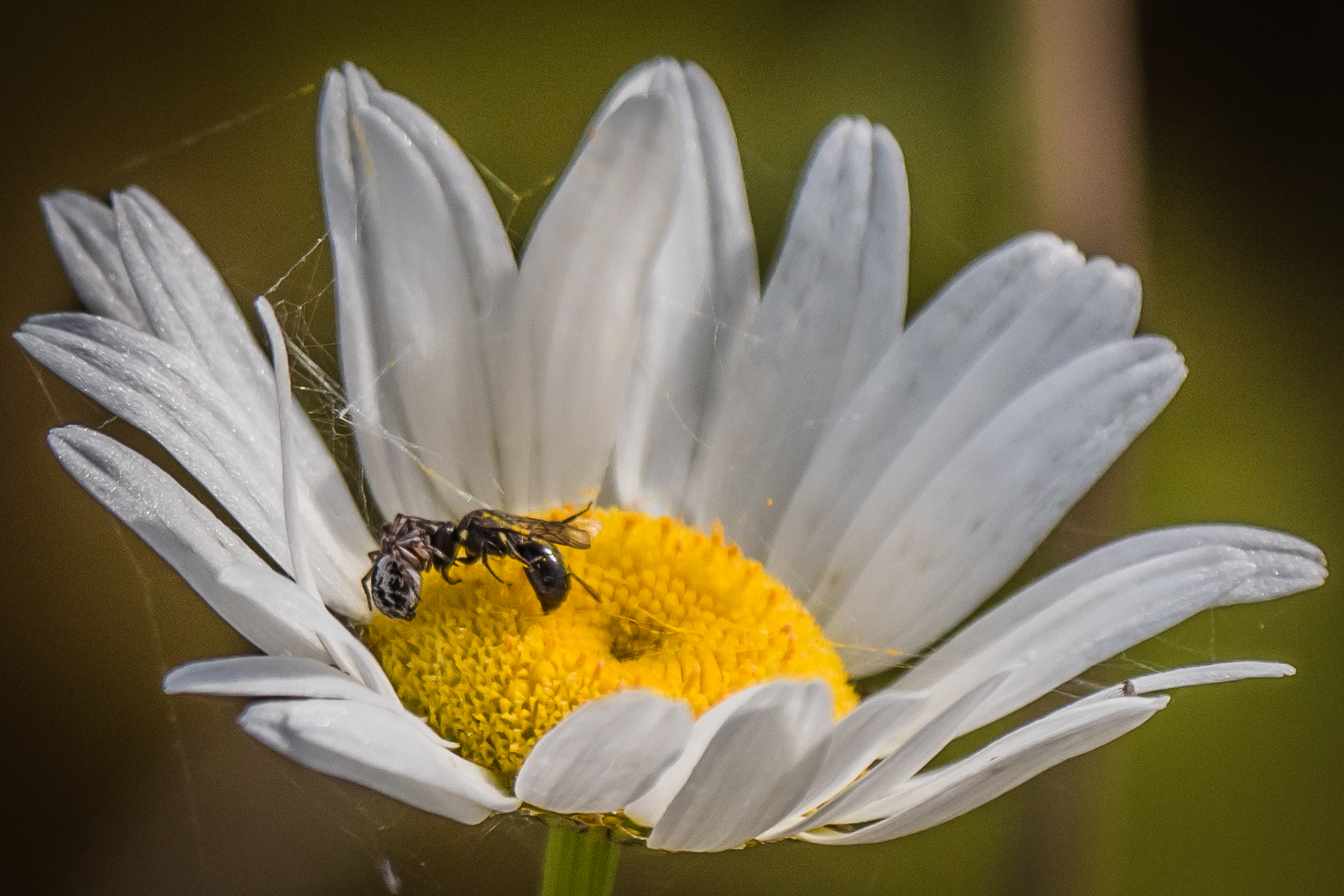
What is going on here????
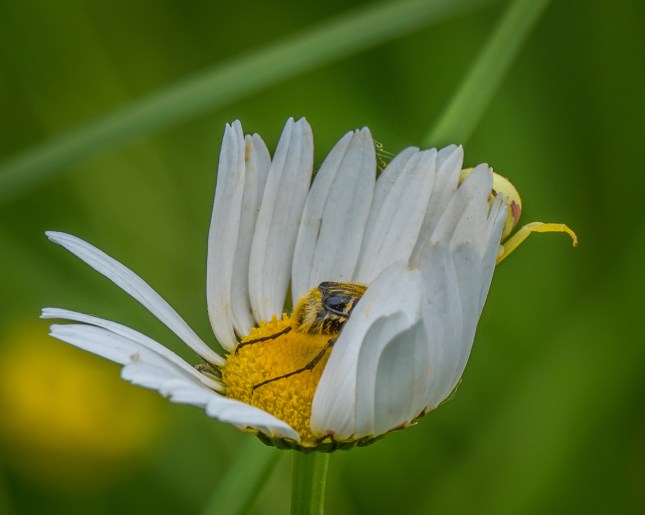
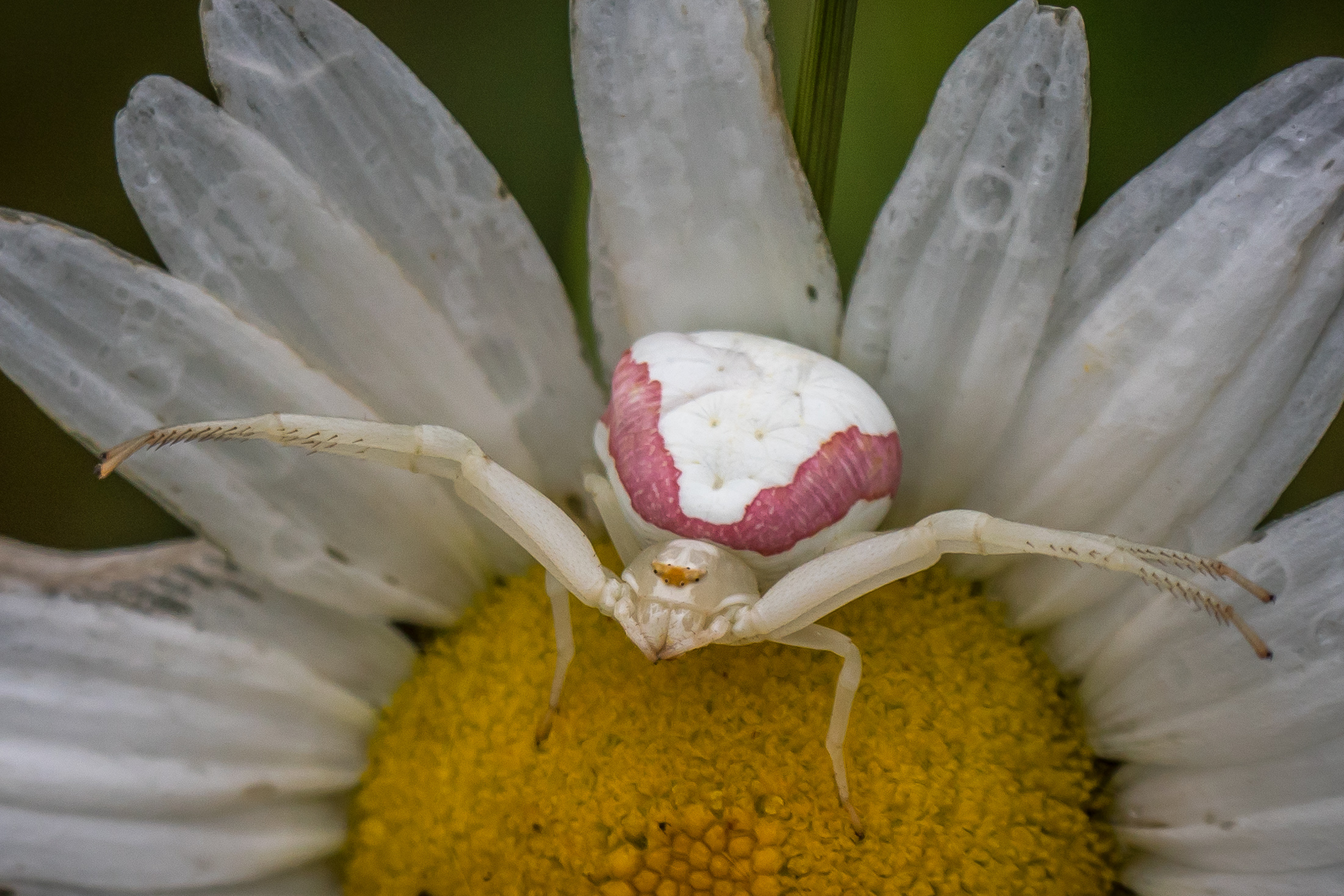
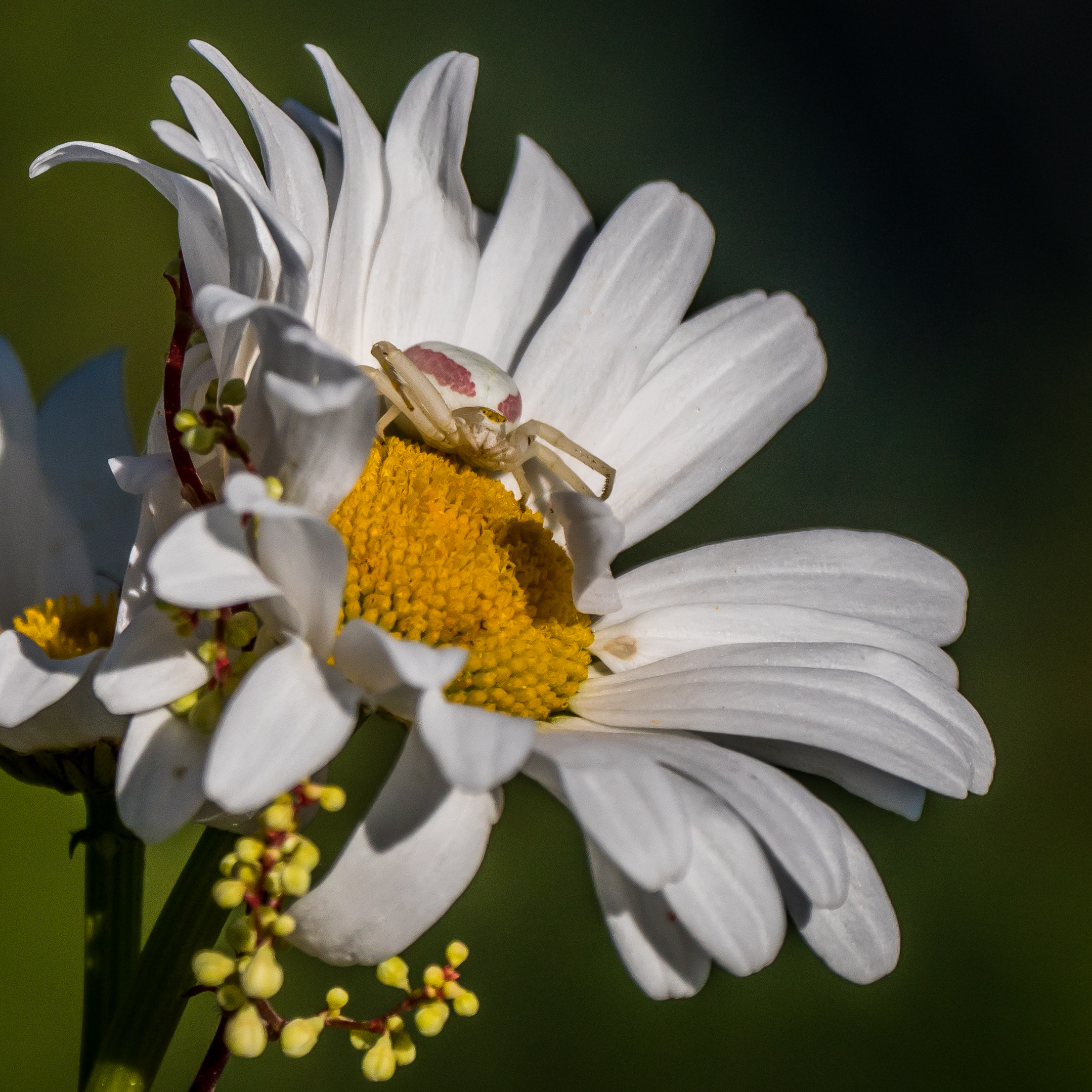
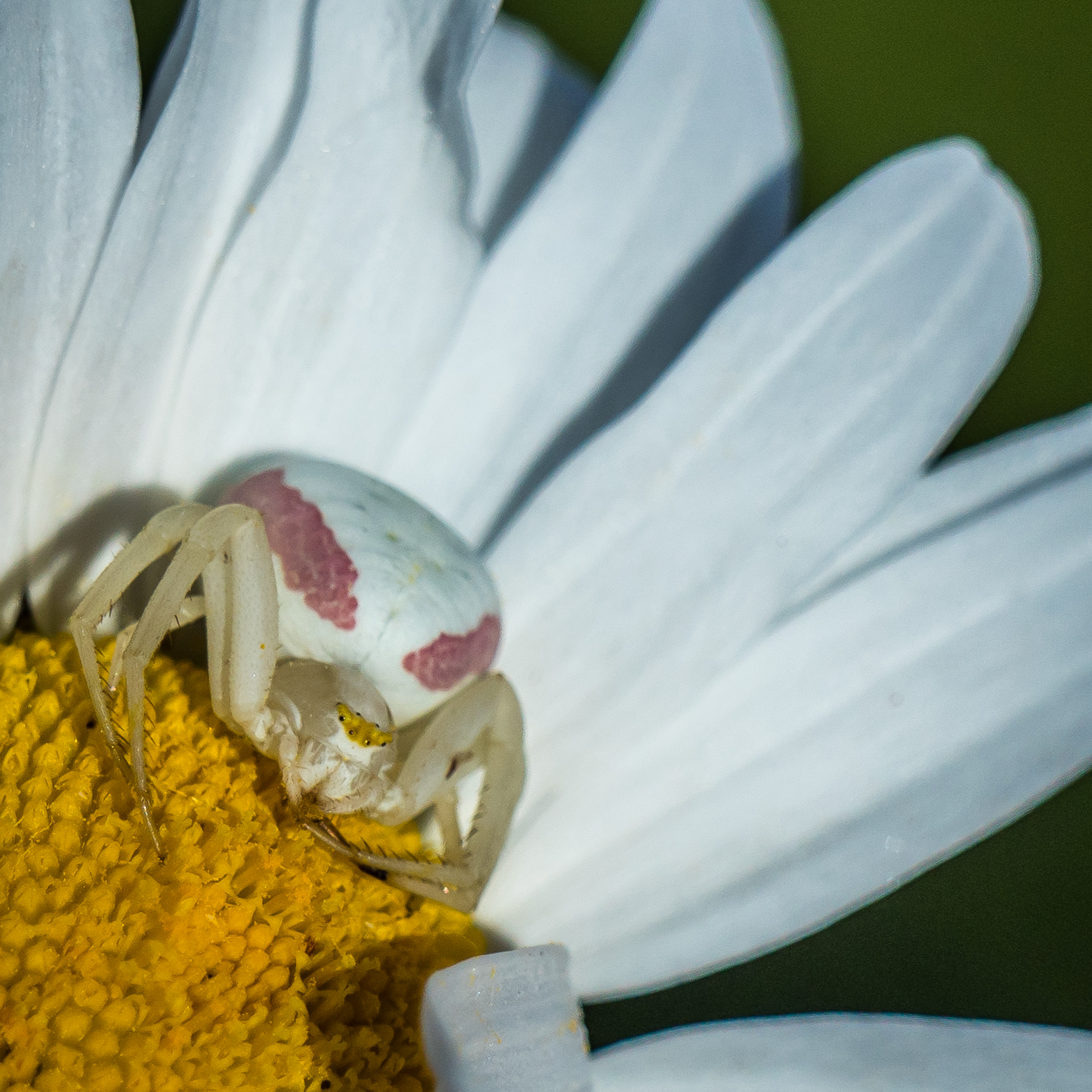
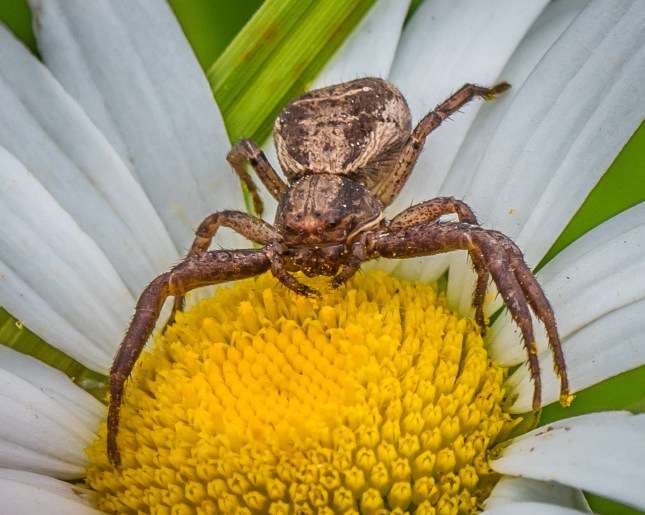
The Crab Spider has parted the florets to grab the Flower Chafer as it was nectaring on the OED.  The Flower Chafer is the same as the Bee-Mimic Flower Beetle which illustrated the difficulty with common names.  But I use Bee-Mimic Flower Beetle instead of T. assimilis because it is more descriptive and easier to remember than some historical botanist’s name.


Here are a pair of Bee-Mimic Flower Beetles in happier times.   And here is a good article on pollinator mimicry, which helps to explain why identifying these rascals is so difficult … for me, at least.


Uh, Oh!  Another  (Ground?) Crab Spider laying in wait ….
A break from the bugs:

Yes, the blossom of a slowly maturing Pitcher Plant.

Back to the Bugs ….

Including yet another Crab Spider …

What do you see here?   Does any word spring to mind?

Alex celebrates Canada 150


20170629-30 Skippers, Crab Spider, Spreading Dogbane, Hoverflies, Bee Flower Beetle
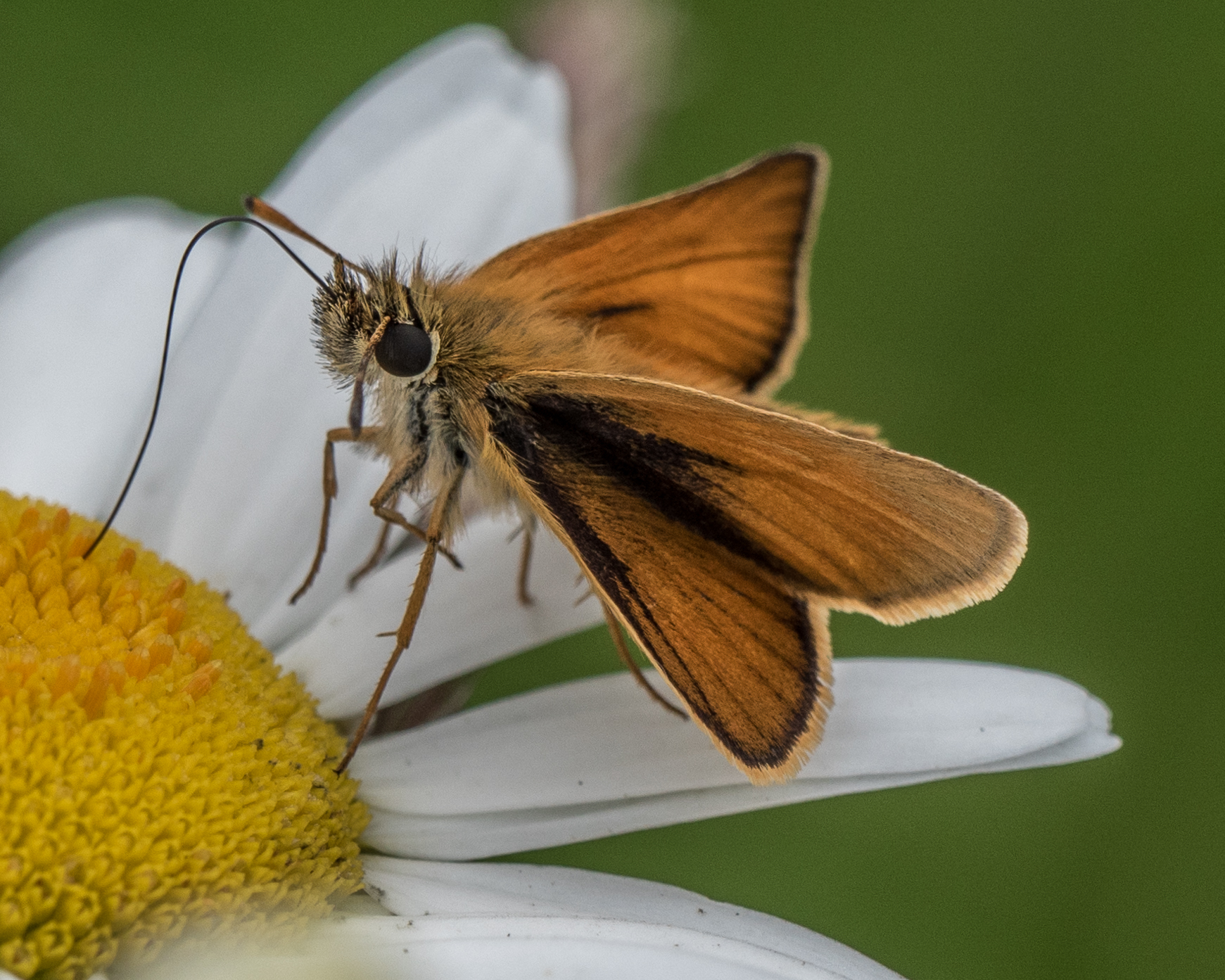
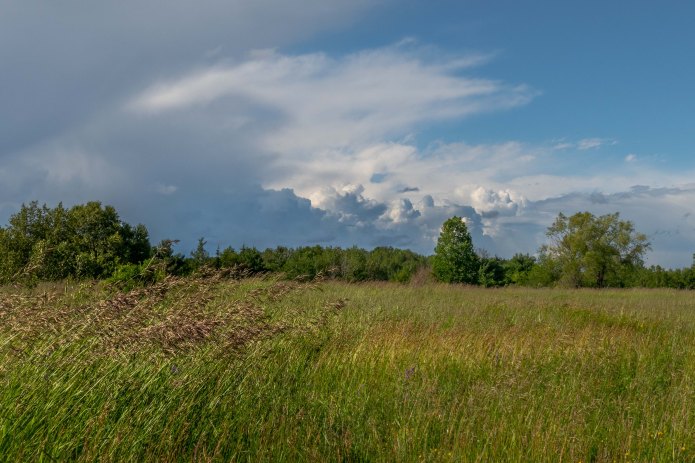
Photo:  Pond on Hwy 522

The Skipper Butterflies have arrived in profusion.  Although they seem to spend most of their time buried deeply in the long grass, some occasionally nectar on Ox Eye Daisies.  I’ve realized that OEDs are a very universal source of nectar and pollen for a wide variety of pollinators and have spent more time with them this year.   I could learn from Hilton Pond.

Skippers  in a variety of poses…


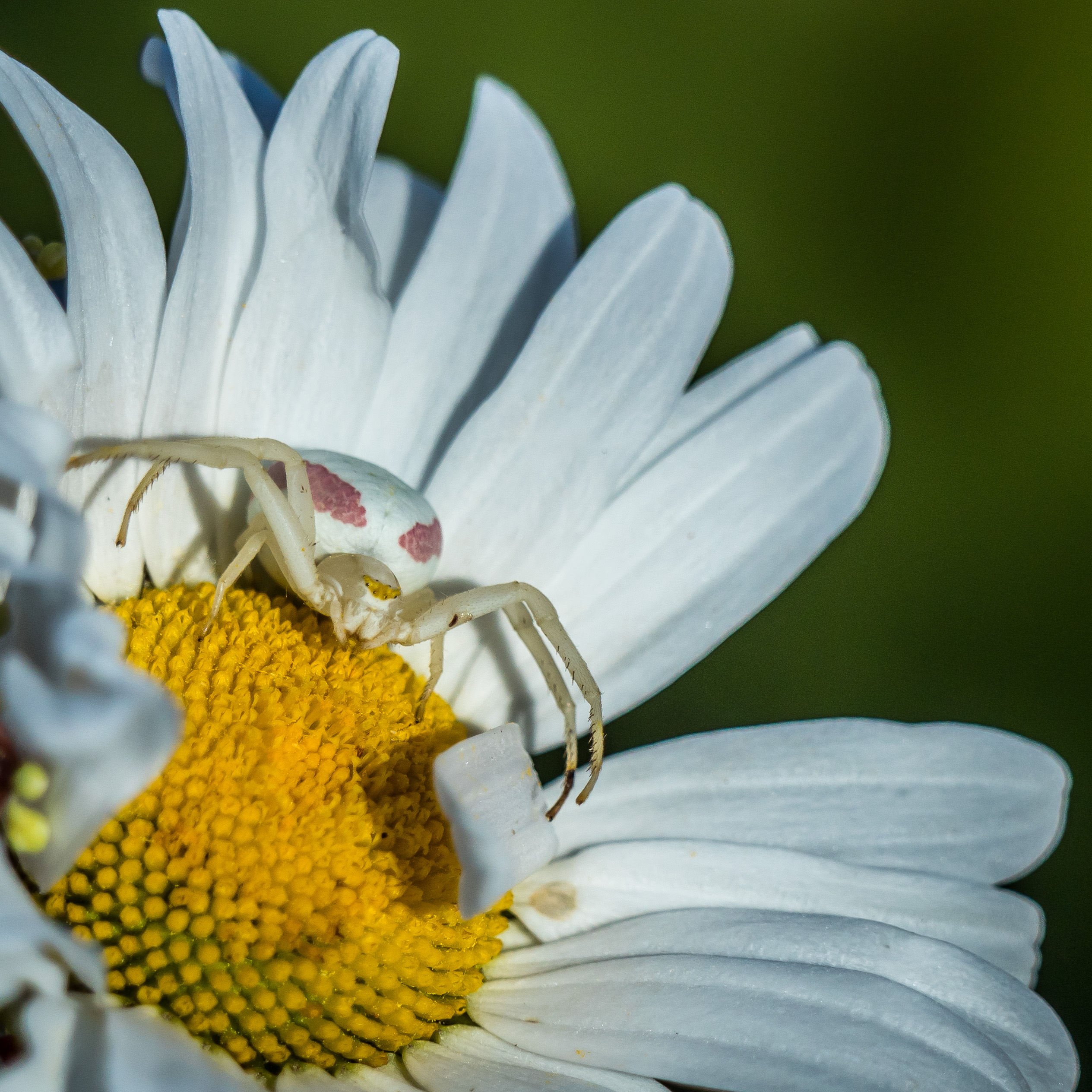
One of the predators of Skippers, the Goldenrod Crab Spider in its white/purple stage ….

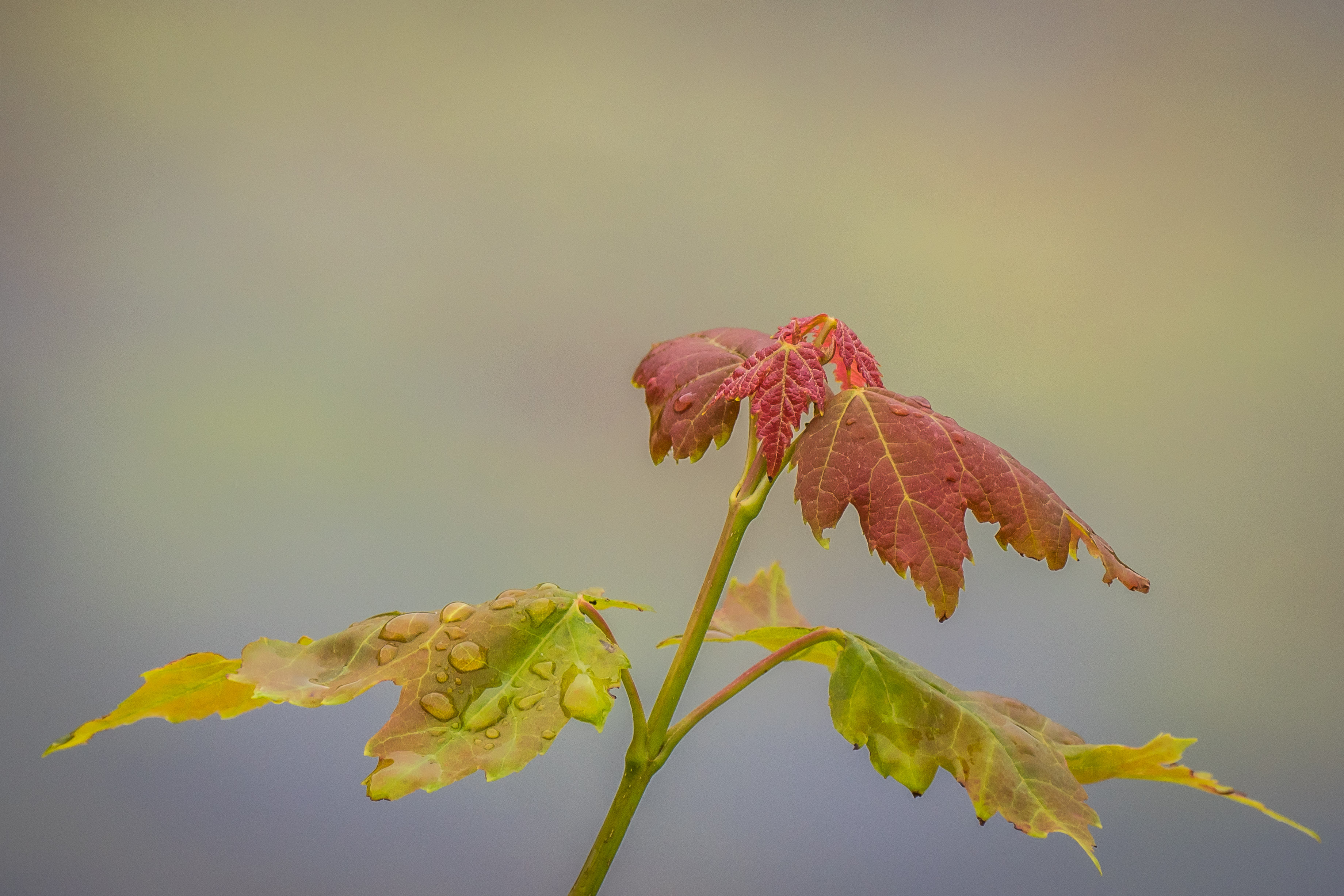
I am paying attention to  the changes in the form of chlorophyll in these maple leaves.  The red light is still being reflected off of, (not absorbed by)  the new leaves, indicating an absence of long wavelength (red) absorbing chlorophyll.   That brand of chlorophyll will go absent again this fall, just before leaf drop.

A poor imitation of C. Monet …

The rainshower stopped a variety of pollinators to visit this butterfly attractor, a relative of Common Milkweed…

C. Monet made me stop to photograph this nice habitat for a big gang of little flies.

Yet to be identified… maybe a bit easier when I see a few more of them.  Skipper-like behaviour..

These Tamarack cones  on Hwy 522 are still purple, unlike the green/yellow ones along Shebeshekong Rd.  I wonder why?

Elegant but unknown Hoverfly on an OED.

Bumblebee nectaring …

I finally have identified this beastie, which I’ve seen a lot of… always nectaring on OEDs.  It is a Flower Chafer, a Hairy Flower Scarab, a Bee-Mimic Flower Beetle, a Trichiotinus assimilis.   I came across the late Eugene Reimer’s photograph of T. assimilis while searching images for “beetle on Ox Eye Daisy”.  Eugene Reimer has a very interesting About Me at his website, http://ereimer.net/

Try using his collection of insect photos as a very handy way to check out obscure insects, like the beastie below…

Thanks a lot, Mr Reimer.

Save

20170628 Sweat Bee, Pickerel Weed, Polypody, Pitcher Plant, Ruffed Grouse, Bumblebee, Woodduck, Paper Wasp

We saw these sights along Shebeshekong Road Hwy 529 on our way back from Parry Sound:

A green Sweat Bee is gathering pollen and nectar … possibly for a nest of eggs yet to be hatched.

A clump of Pickerel Weed is gathering energy for its purple flowers which we’ll see in a few weeks…

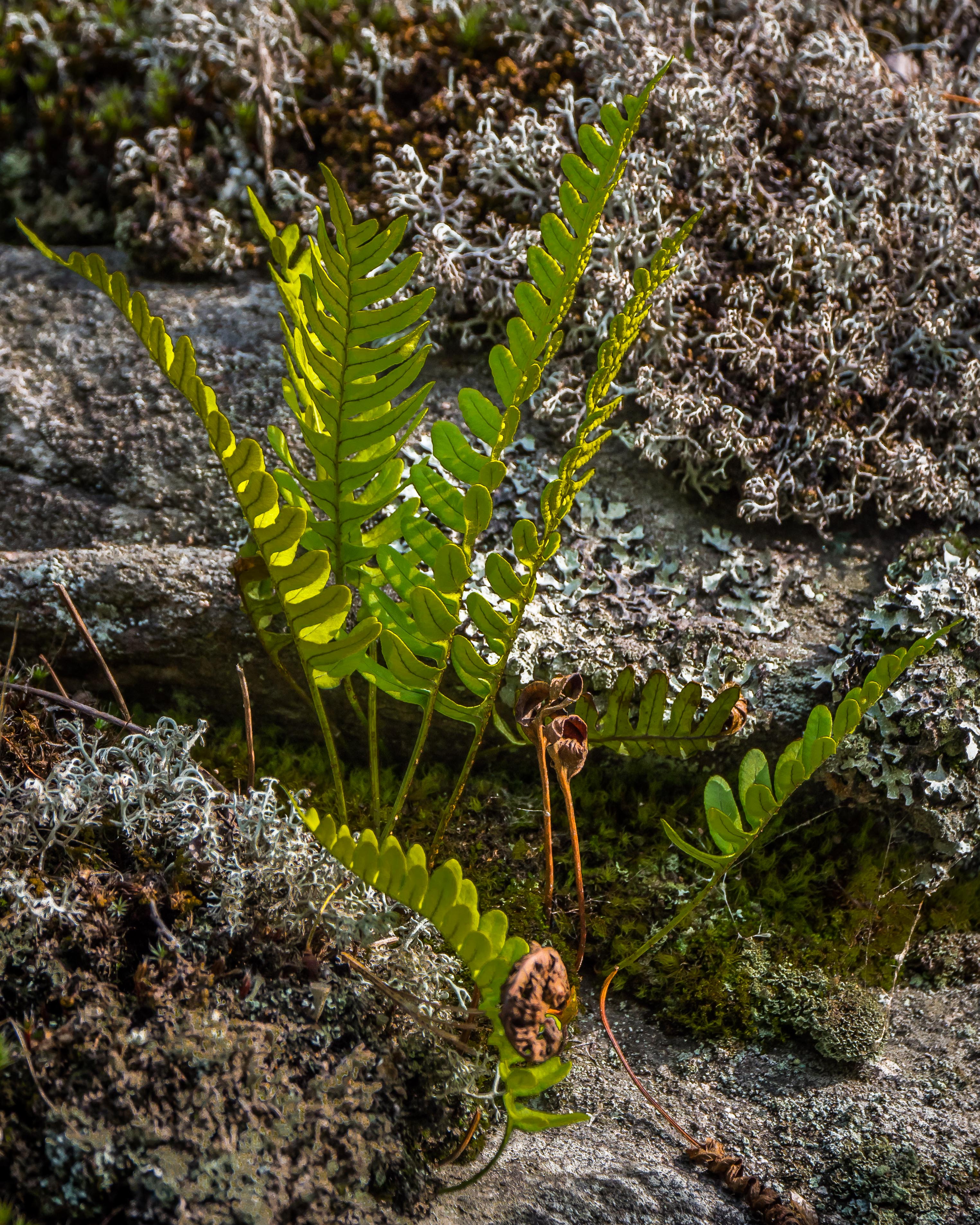
This is Rock Cap Fern or Polypody


The Pitcher Plant is maturing.  I am interested to see how that flower head develops….

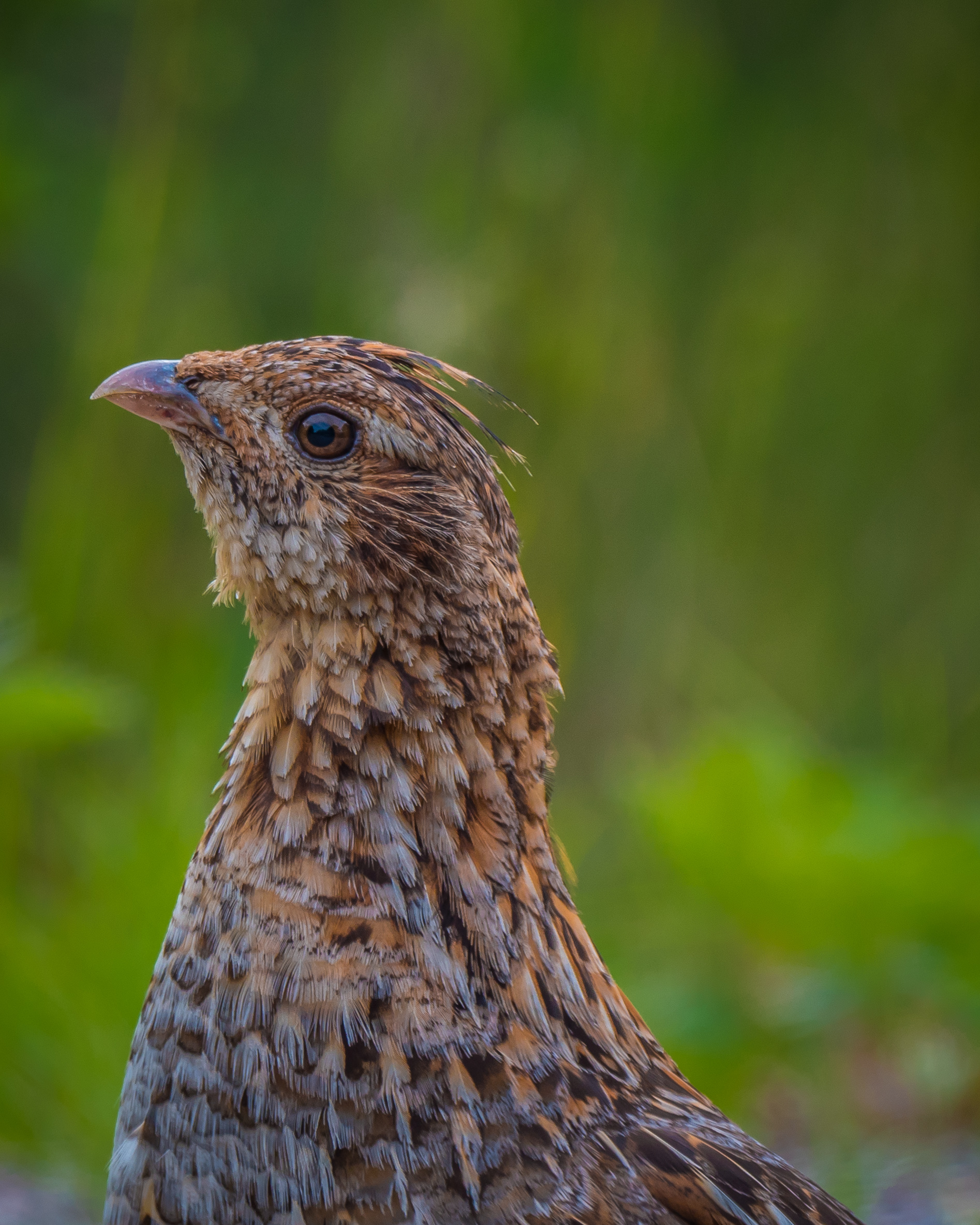
Ruffed Grouse giving the photographer the eye ….(click for more detail)

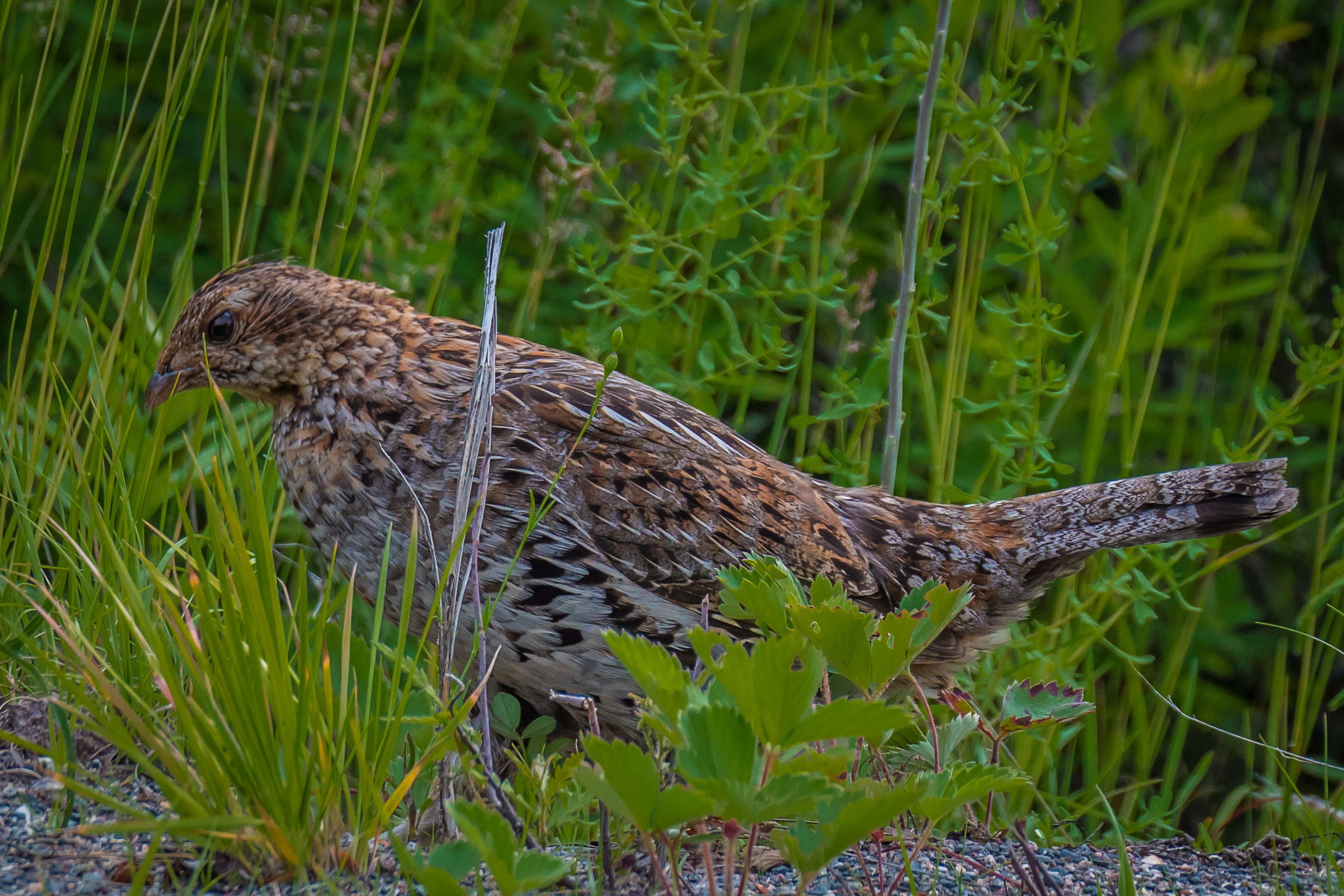
Strutting…

…. then quietly disappearing into the long grass …

This appears to be one of the many Paper Wasps that are found in North America.   Photos of them can be found on the many pest control websites found on the internet.

Bumblebee with friend enjoying lunch …

A lone female Wood Duck in a stream near the intersection of Hwys 645 and 529.  No sign of a male.

20170627 Clearwing Butterfly, Bumblebee, Hoverfly, Copper Butterfly, Baskettail, Canadian Tiger Swallowtail, Harris Checkerspot, Painted Lady Butterfly, Monarch Butterfly

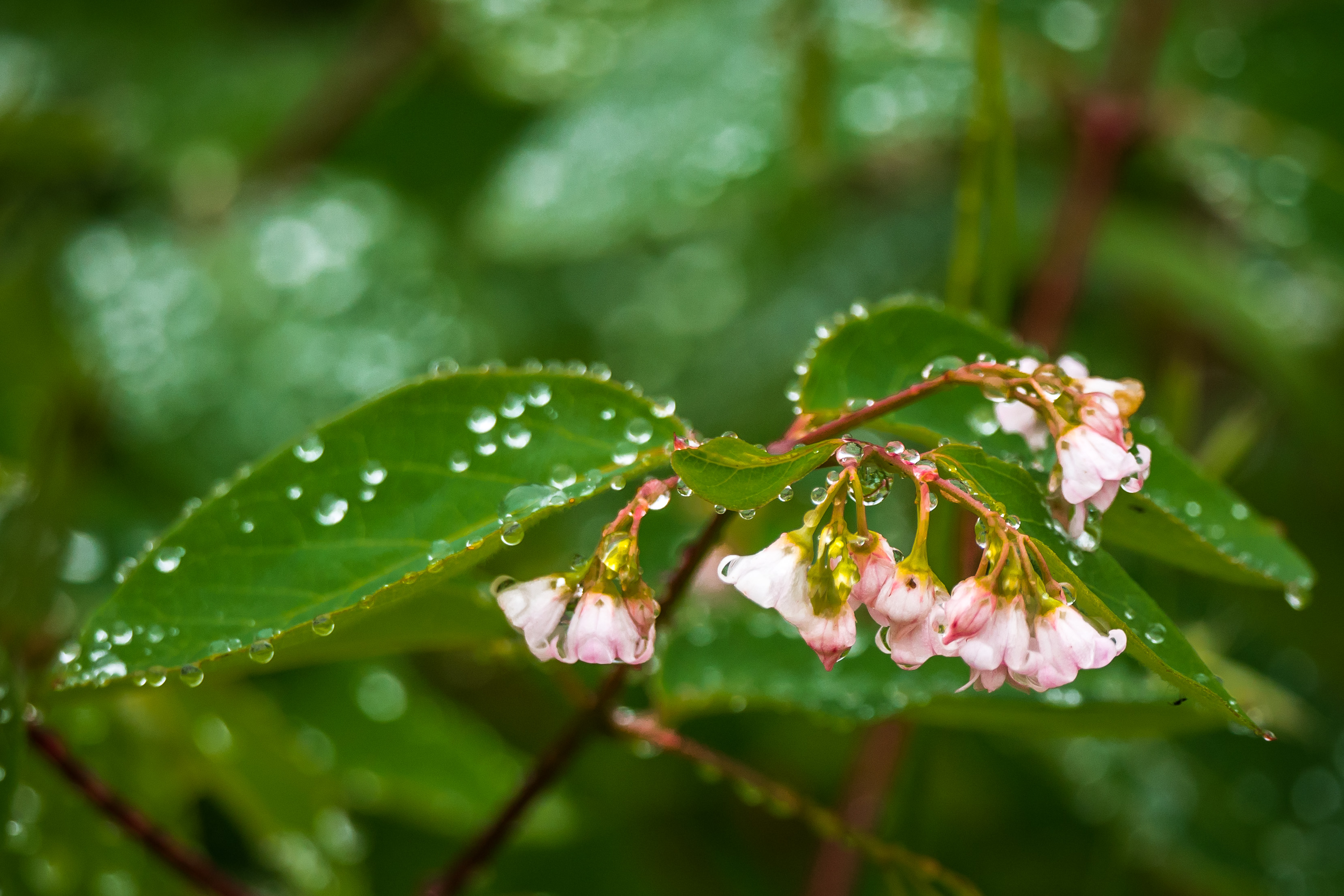
Above photograph:  Kalmia angustiflolia, Sheep Laurel, in full bloom in a peat bog along Hwy 529.


A few hours of respite from the rain and wind gave some opportunities for further exploration along Hwy 529:

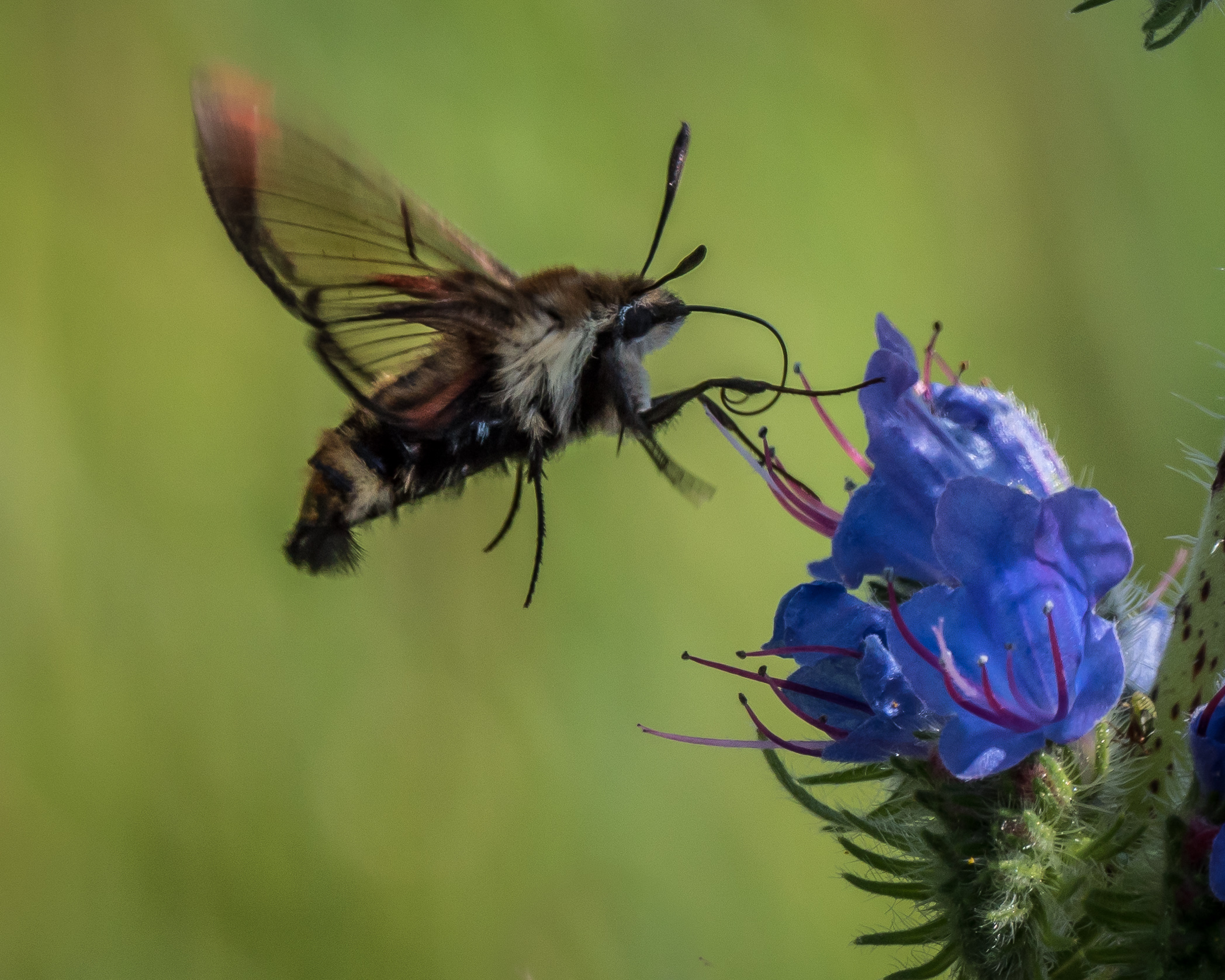
Hummingbird Clearwing Moth uncoiling its proboscis as it approaches Viper’s Bugloss…

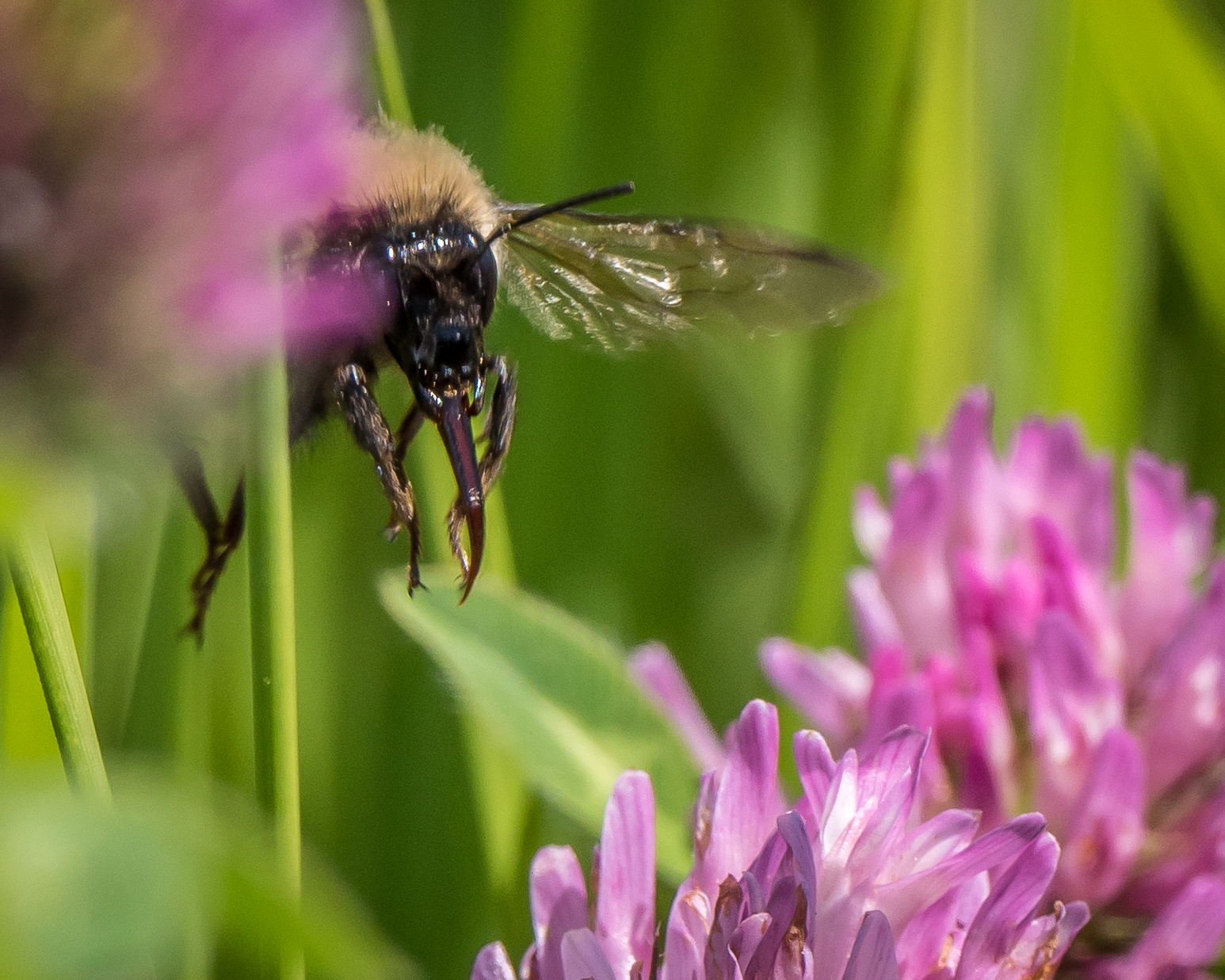
Bombus has its refuel probe and landing gear extended as it approaches a clover blossom.

My intent was to photograph the Copper Butterfly.  I didn’t see the  spider waiting in ambush until I looked into the viewfinder.  I wonder if the stalk of grass helped the spider find this spot?

38 seconds later the spider has disappeared …

When I got home I saw where the spider had gone… 3 seconds after the earlier photo one of its legs is visible above the petal at the back of the flower.  I wish that I was looking harder at the time of exposure.  I might’ve witnessed nature in the raw.

A Common Baskettail is resting here… probably chewing and swallowing black flies…

A Hoverfly (possibly Eristalis interruptus) gathering nectar from Common Yarrow….

Three more Hoverflies, I think….

See:  https://meadowhawk.wordpress.com/2010/10/06/hover-flies/    and:

https://meadowhawk.wordpress.com/2014/09/29/backyard-hover-flies/

Eastern Tiger Swallowtail nectaring from a Spreading Dogbane…

Correction, especially on this Canada Day!

Canadian Tiger Swallowtail!

The “Eyes” on its underside give this butterfly away as a Painted Lady

The white spots in the dark squares on the back of the inner wings identify this butterfly as a Harris Checkerspot, whose numbers are decreasing rapidly in the US Northeast.

Here is another Vanessa cardui

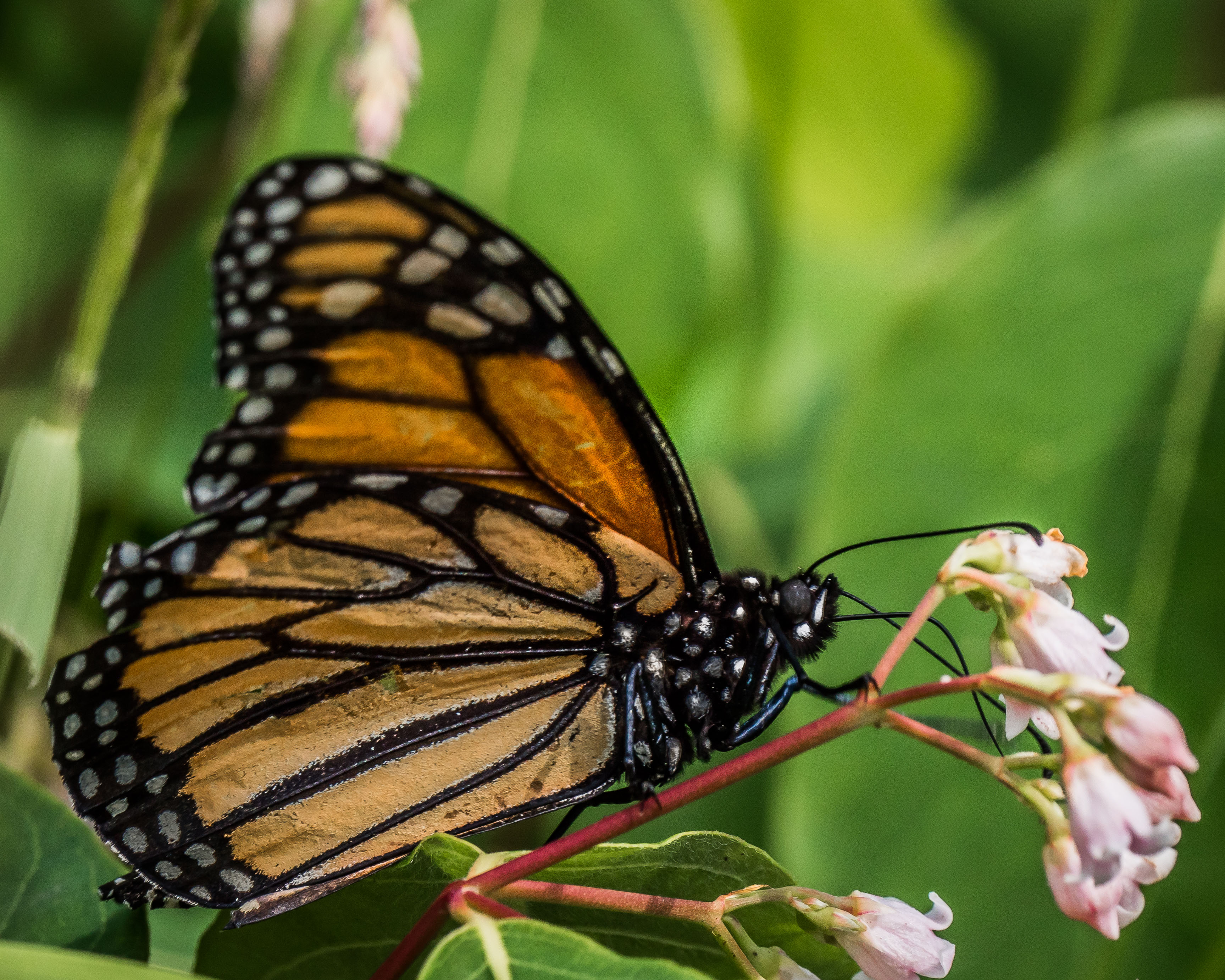
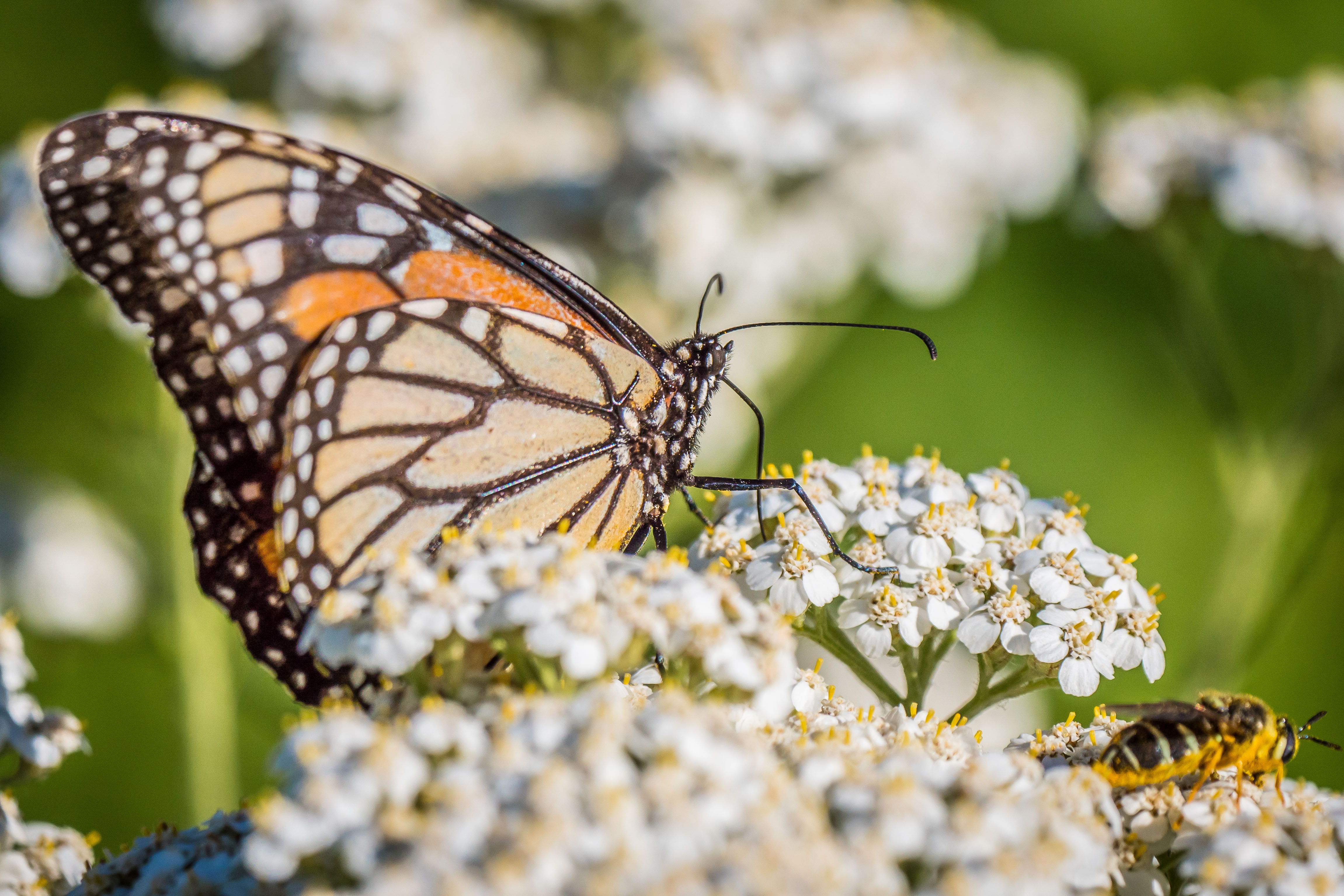
The Spreading Dogbane that this Monarch is nectaring from is related to Common Milkweed.  Here is a good read:

https://the-natural-web.org/2014/07/08/what-good-is-dogbane/

Bee and fleeing Hoverfly …

More Hoverflies …

And a bee (click on it to see its very strange eye) …

Is this a Fowler’s Toad?  It was about 2″ tip to tail….

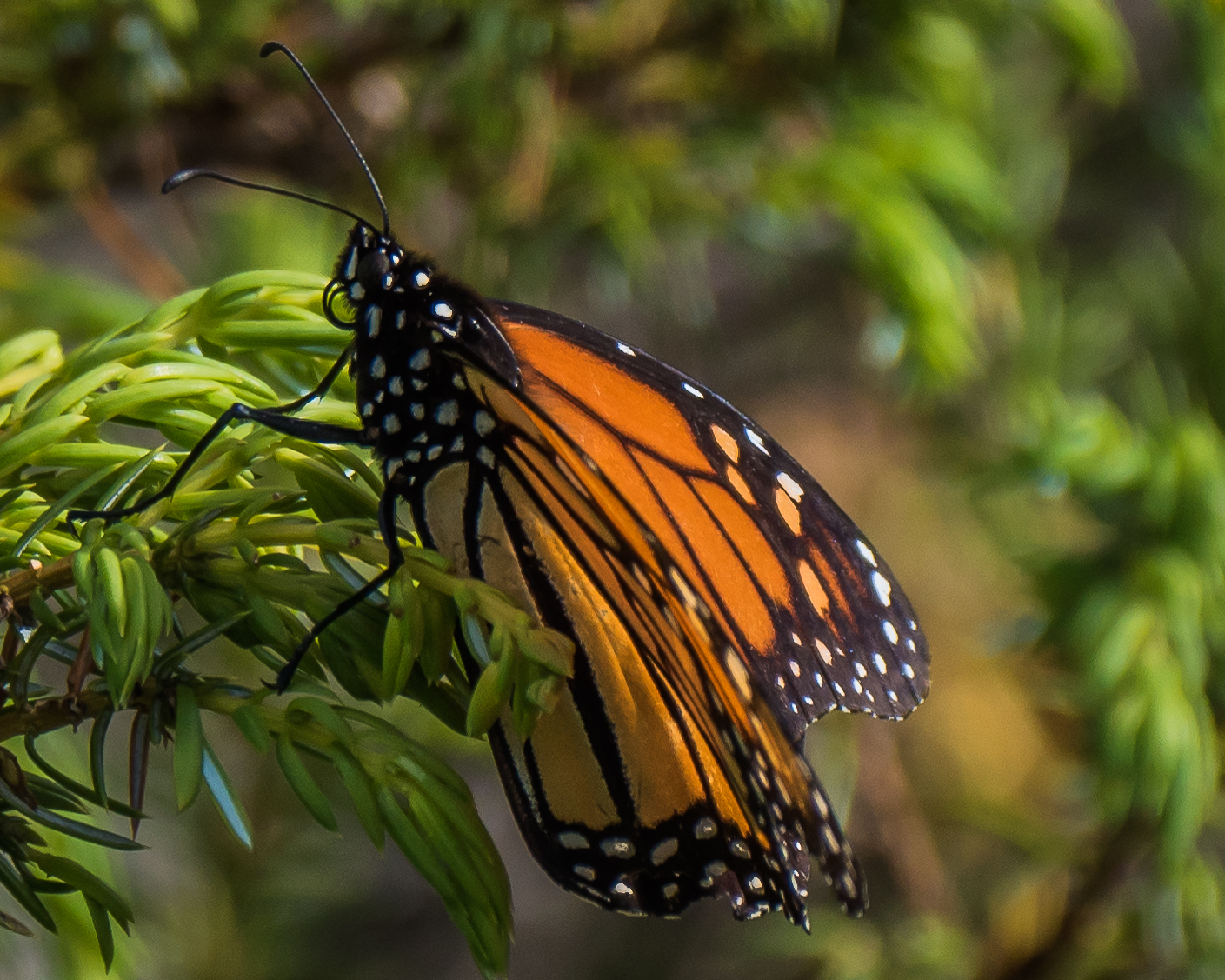
This Monarch was hanging out on juniper branches next to a patch of milkweeds, not yet in bloom.

Interesting sheen to the hair on the torso of this Painted Lady …

I am not sure what this (Ground Crab ?) Spider is doing here …

But it’s quite obvious what is going on here, on a different Ox Eye Daisy.

Male, uncoiling its proboscis …

Some warmer drier weather is forecast for July.  I suspect that we’ll see an abundance of pollinators —- and their predators.


Save

20170626-27 Crab Spider, Skipper, Bumblebees, Hummingbird Clearwing Moth, Beaked Hazelnut, Yellow Toadflax, Long Hoverfly, American Goldfinch, Viper’s Bugloss

We had a couple of breaks in the continual rain so we got out to see what we could see…

Bumblebee foraging for nectar on Ox Eye Daisy …

P1690694-1

A crab spider (?) lying in wait on the top of a Cow Parsley blossom:

P1690721-1

A Sweat Bee, I think, on an Ox Eye Daisy:

P1690723-1

An unknown spider (Xysticus??) looks to be manhandling a carcass of a Goldenrod Crab Spider from its Ox Eye Daisy.

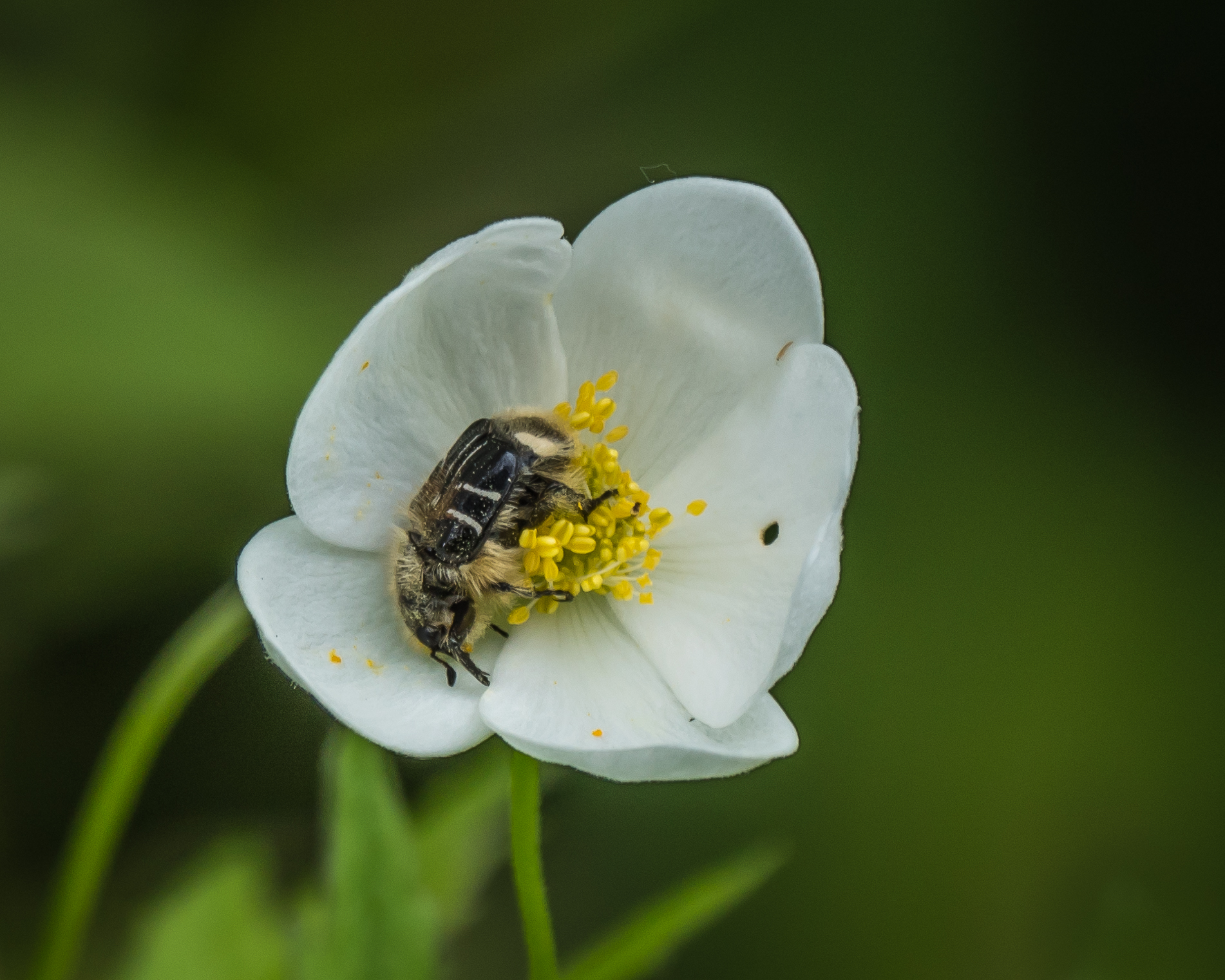
A critter in the last of the Canada Anemones …

One of the many Ontario Skippers (European?) on vetch …

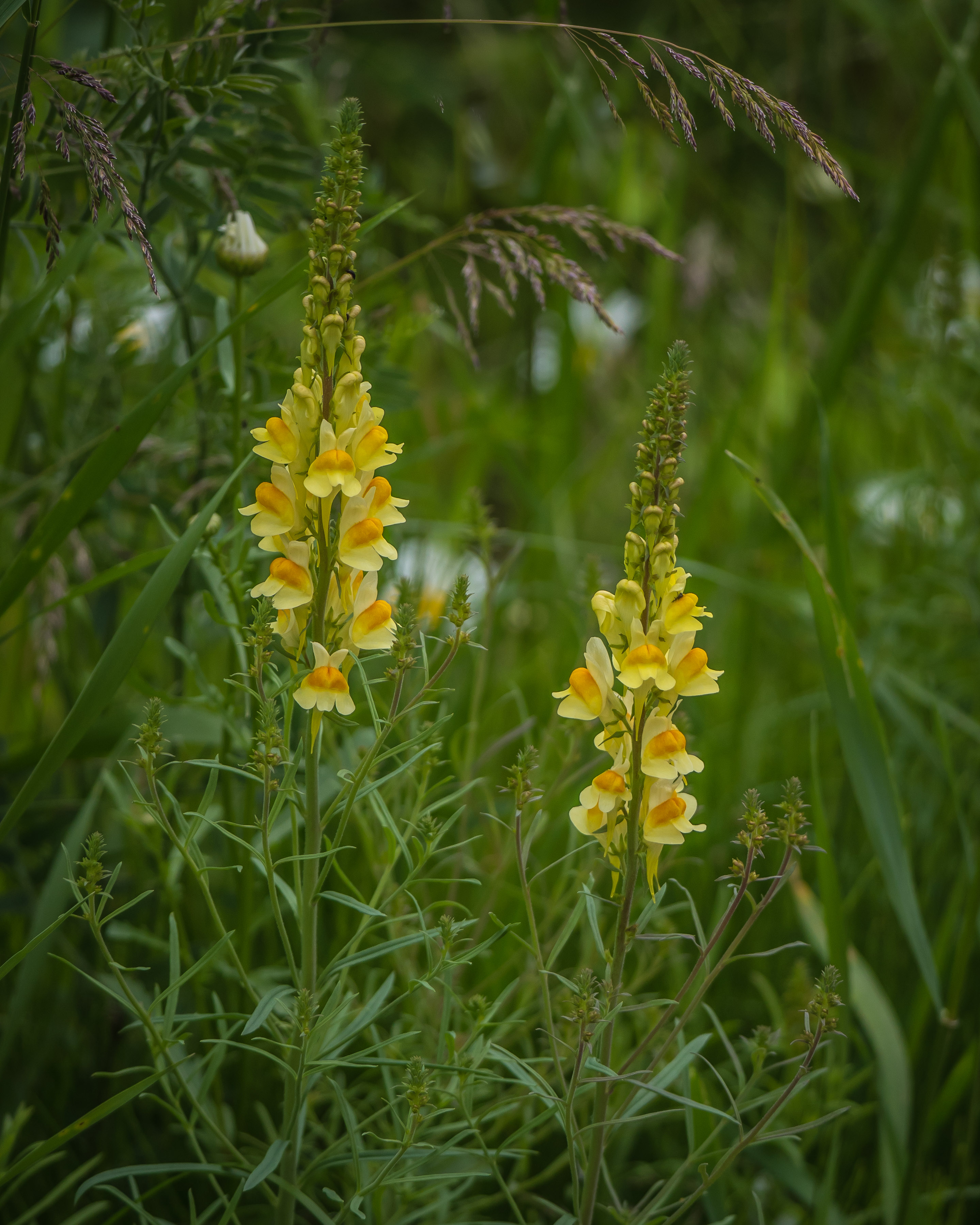
First sighting of Linaria vulgaris (common toadflax,  yellow toadflax, or butter-and-eggs) this year:

This looks like a Long Hoverfly

Wild plum with Plum Pocket

Remember those beautiful little flowers in April, about the same time as Red Maple?    Yes!   Corylus cornuta that will be ready to harvest in a month.


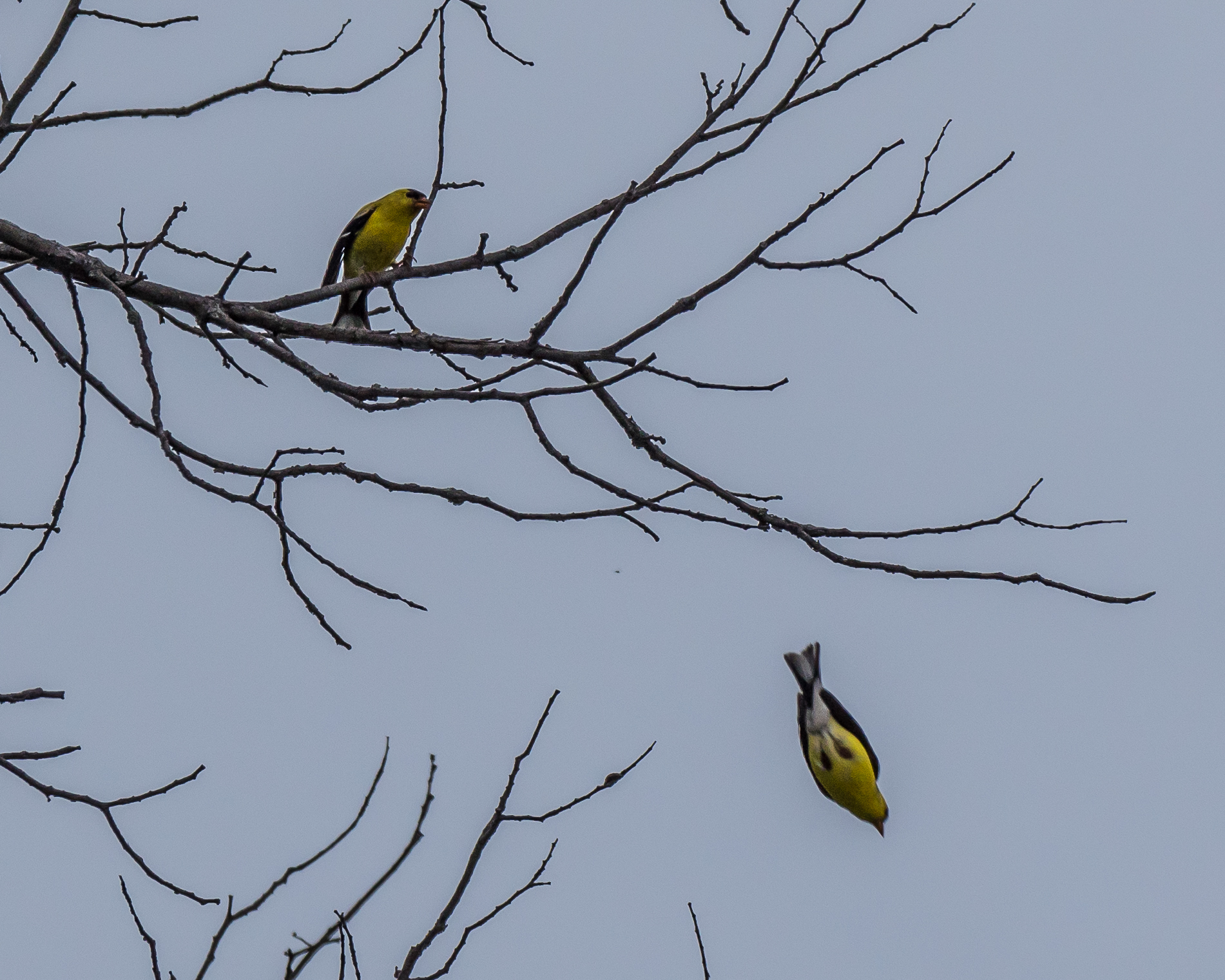
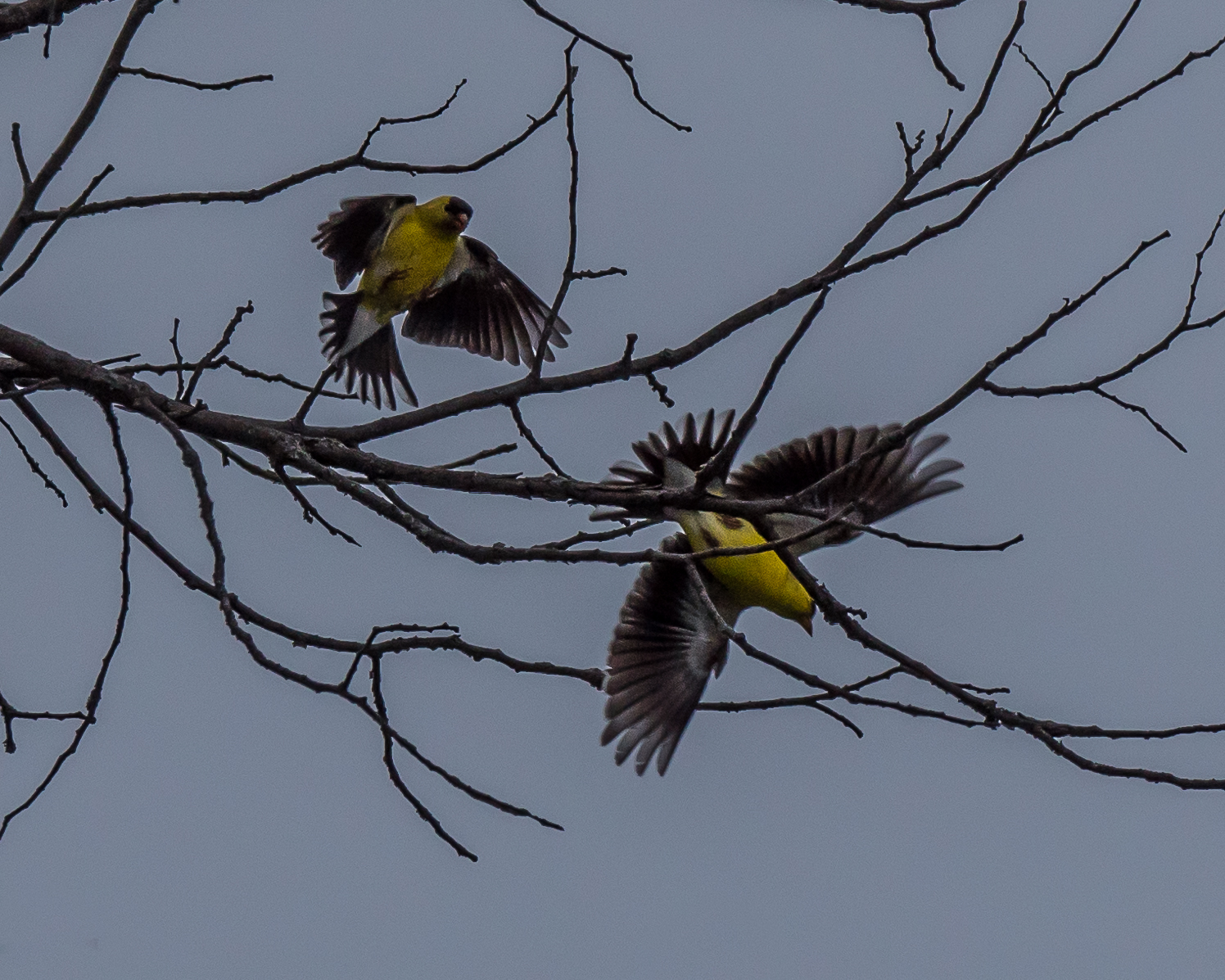
A pair of American Goldfinches.   Dancing?  Maybe!

“American Goldfinches breed later than most North American birds. They wait to nest until June or July when milkweed, thistle, and other plants have produced their fibrous seeds, which goldfinches incorporate into their nests and also feed their young.”

Watch me dive!!

Uh!  Oh!  Bombus ternarius, commonly known as the orange-belted bumblebee or tricoloured bumblebee, in fatal embrace of a Goldenrod Crab Spider.

Another Bombus nectaring at a Viper’s Bugloss blossom.


Hummingbird Clearwing Moth —- First time I’ve seen one on a Viper’s  Bugloss.

Bumblebee really gets into the Blueweed.

Hummingbird Clearwing is uncoiling its proboscis in preparation for nectaring …

Whenever we get a bit of sunshine the pollinators get busy doing their thing.  The very small insects, including hoverflies and skippers don’t seem to be deterred by rain.

Finally we must have one of Diana’s beauties, just in time for Canada Day:

See the visitor?

Speaking of visitors, have a look at these beauties.

20170625 Hoverflies, Plum pocket, Polydrusus formosus

We have been paying close attention to the smaller pollinators out and about on these chilly days.

Some kind of fly taking in some nectar through its proboscis …

Green flying ant or green sweat bee??

Another Syrphid or Hoverfly ….

Hmmm….


Hmmm??


This is a Green Immigrant Leaf Weevil ….

I am seeing these ambushers on every outing nowadays.  I suspect that I am seeing more out there!

Spreading Dogbane is an important source of nectar for many pollinators…

This might be a yellow water buttercup.  I’ll have to keep and eye out for more….

Monet, again ….

This appears to be Plum Pocket Disease, which can also affect our wild cherries:


Good story about Luna Moths.

20170623 Rainy Day, hoverfly, Crab spider, Tarnished Plant Bug, Japanese Beetle, Cedar Waxwing, Great Blue Heron, White Water Lily, Wood Satyr, Tamarack Cones

On the way back from the Norse Brewery (along Hwy 69, off  Woods Road) we stopped to make some pictures of nature in the rain.  Here are some of them:

Tragopogon dubius (yellow salsify,[1] western salsify, western goat’s-beard, wild oysterplant, yellow goat’s beard, goat’s beard, goatsbeard, common salsify, salsify) gathering some raindrops…

A Tarnished Plant Bug resting on an Ox Eye Daisy petal:  Also: TPB

Click on this photo to see the water droplets on the various parts of this Crab Spider.

Notice the discarded parts of an earlier meal of this Crab Spider ….

What are those little red balls on this Syrphid Fly, (Toxomerus geminatus ?) aka Hoverfly or Flower Fly?

Green beetle enjoying the water droplets …

Japanese beetle (?) out in the rain, with water droplets on its exoskeleton.

Wet grass …

Wet day lilies…

Another hover fly …

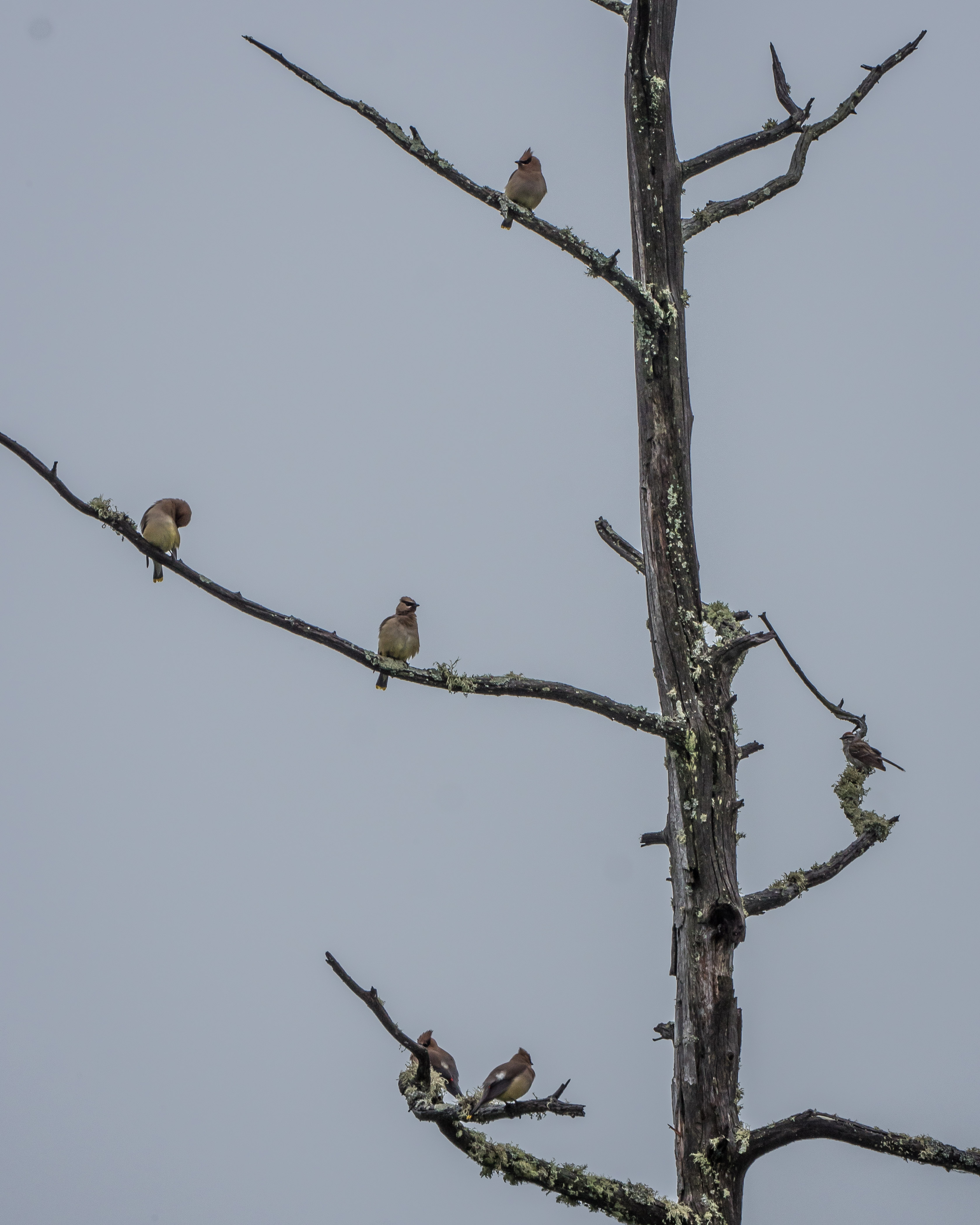
5 Cedar Waxwings and a smaller birdie on a snag…

Duck doing a low pass over a GBH.

Little Wood Satyr on a dry leaf, under the canopy …

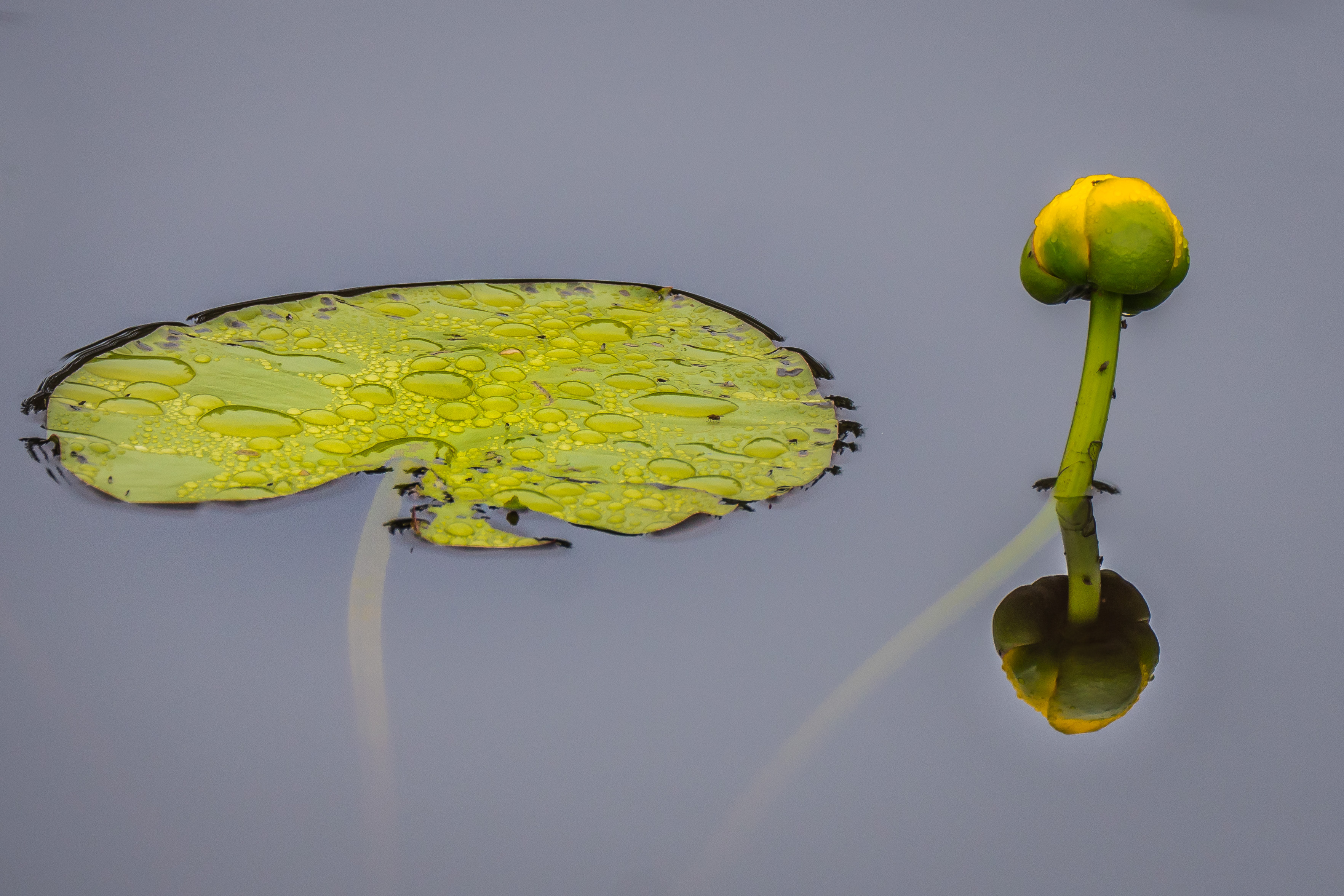
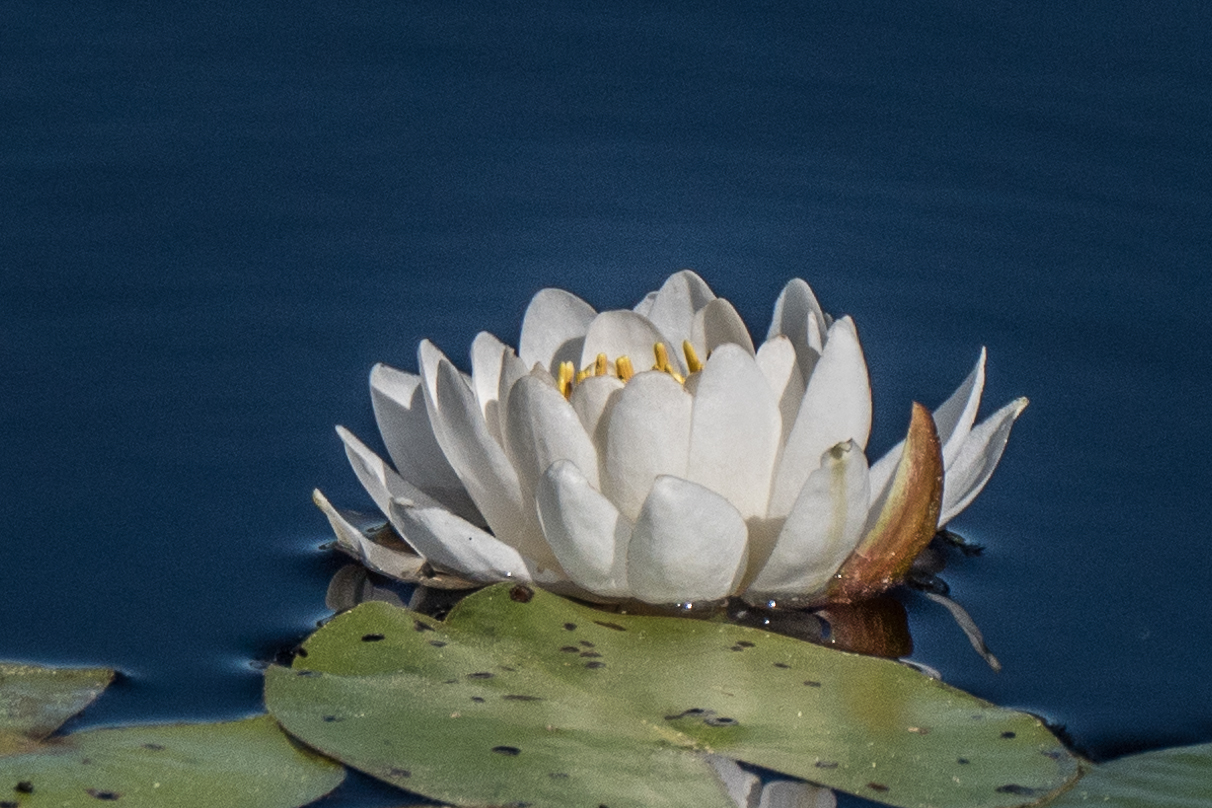
Fragrant White Water Lilies are ascending now…

This is the first time that I have noticed the Tamarack cones change from purplish to pale green.  Apparently I am not alone.

Mark Berkery just posted some more amazing images.


20170621 Summer Solstice Ambush, Painted Lady, Monarch, Thalictrum, Water Lilies, Sweat bee, Crab Spider

We were out on Old Still River Road and Hwy 529 down to Big Lake on our National Aboriginal Day on the Summer Solstice.  Here are some sights seen along the way.


A well worn Painted Lady visits a naturalized Red Clover blossom for some nectar…

The Meadow Rues are bursting into bloom now…

This Sweat Bee is gathering pollen on  Common Yarrow, which have just started blooming.

Beware this crab spider poised to ambush a “customer” with its poised front claws.

Another one, poised to strike:

Up closer.   Click on the photo so see its eyes clearly.

It has retracted its front claws, perhaps to move.   Or maybe to make picture-making a little easier for the photographer.

As we passed the pond at Big Lake…

We saw more critters feeding on Yarrow nectar …

Monarch and Sweat Bee sharing a blossom …..

Alas! for this Sweat BeeAt last! says this crab spider!

If you click on the photo you can see one of the spider’s eyes as it sucks the vital juices out of the bee’s “neck”.

On the way home, the setting sun illuminated this nice triplet of Yellow Pond Lily blooms …

One of my internet acquaintances says, “the connection one gets from trying to understand the subtleties of nature is truly the best.

PS   The shelf fungus at the top of this post appears to be Dryad’s Saddle.  It is always wise to positively ID a mushroom from several sources before tasting it.

Save

Save

20170620 Jamot Rd Monarch, White Admiral, Harris’s Checkerspot, Painted Lady, Tufted Loosestrife, Sheep Laurel, Ruffed Grouse
I don’t use a compost pile anymore as I have had bear problems.  So nowadays I return kitchen vegetable and animal waste back to “the bush” — a natural recycle.  After that and a doggie walk, we spent an enjoyable afternoon idling along Jamot Lumber Road.    This is some of what we saw:

The Monarchs are feeding on orange hawkweeds and laying eggs at the bases of common milkweed leaves.

Are these little flies feeding on something?

A yellow tufted loosestrife growing from the top of an altered beaver dam.

This is an amazing shot when you look closely!   Click on it to see what the White Admiral has in the coil of its proboscis.


Here is a closeup from a photo taken 10 seconds after the above one.

Is it eating a grain of sand?  Hint:  See the last item on this list of Butterfly Garden Necessities.

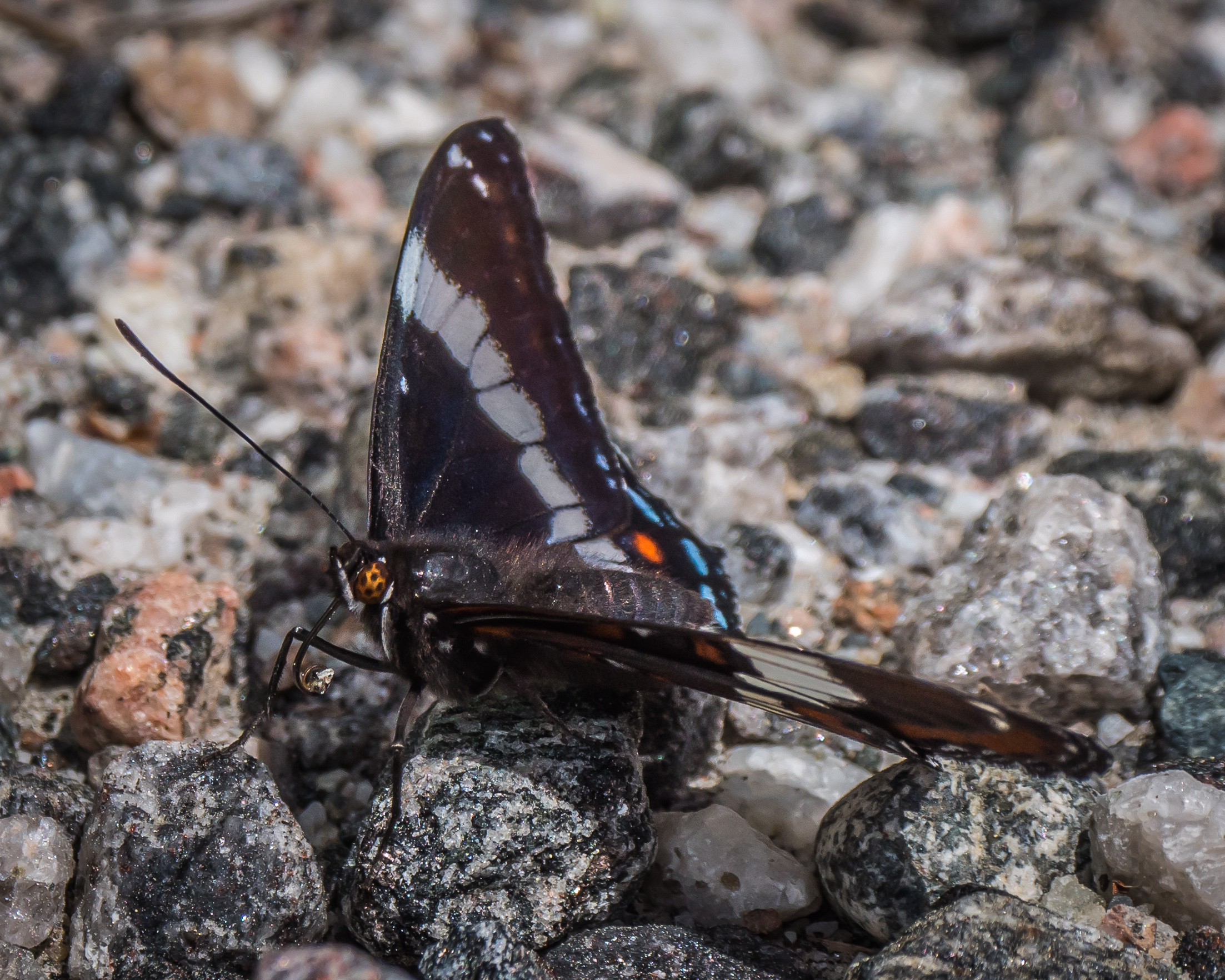
Two good ID photos of the White Admiral:

I think that this is a Harris’s Checkerspot, Closyne harrisii.

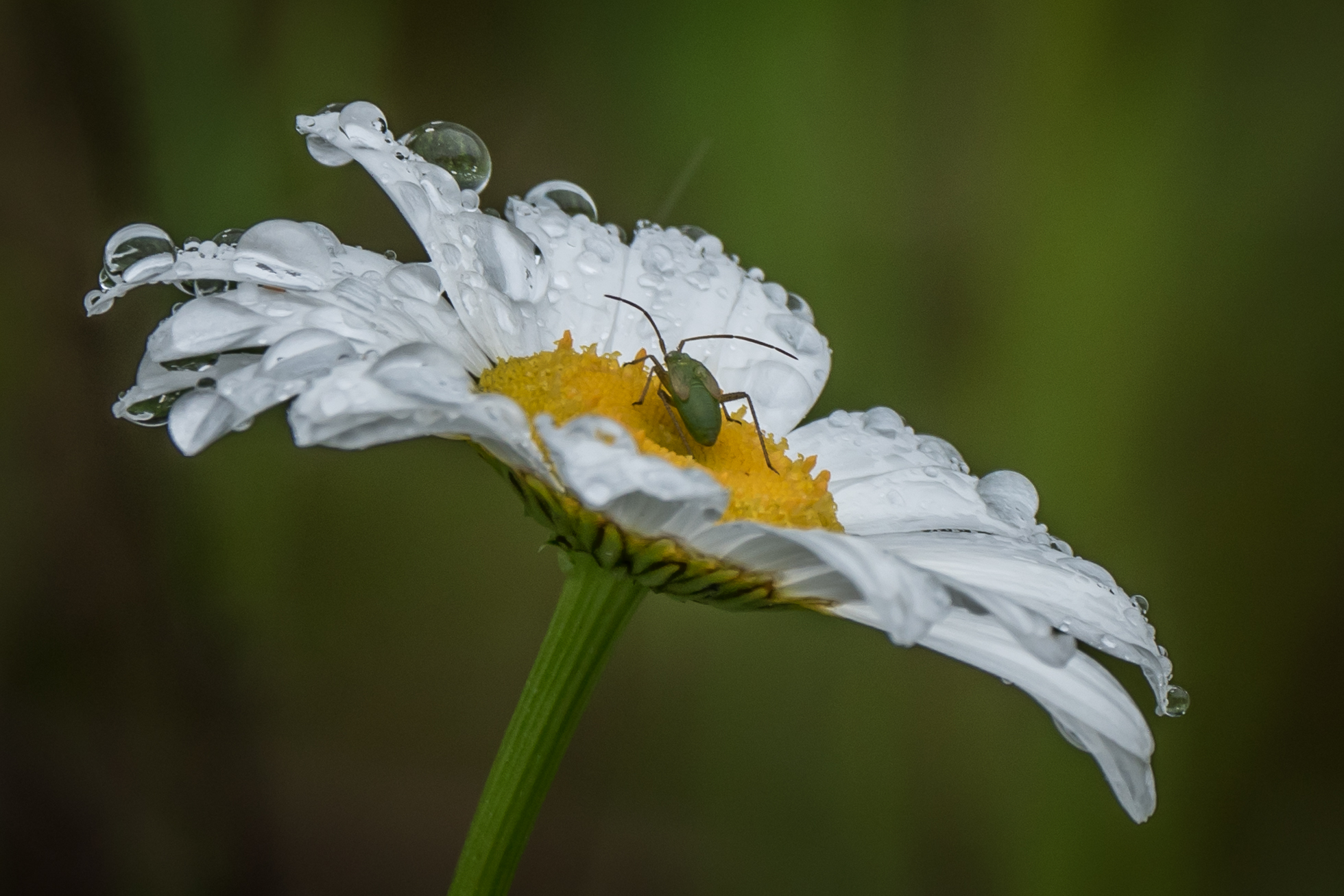
Green bug on ox eye daisy …

This ruffed grouse was having a bath in the dust along the side of the road.  Maybe it is molting.

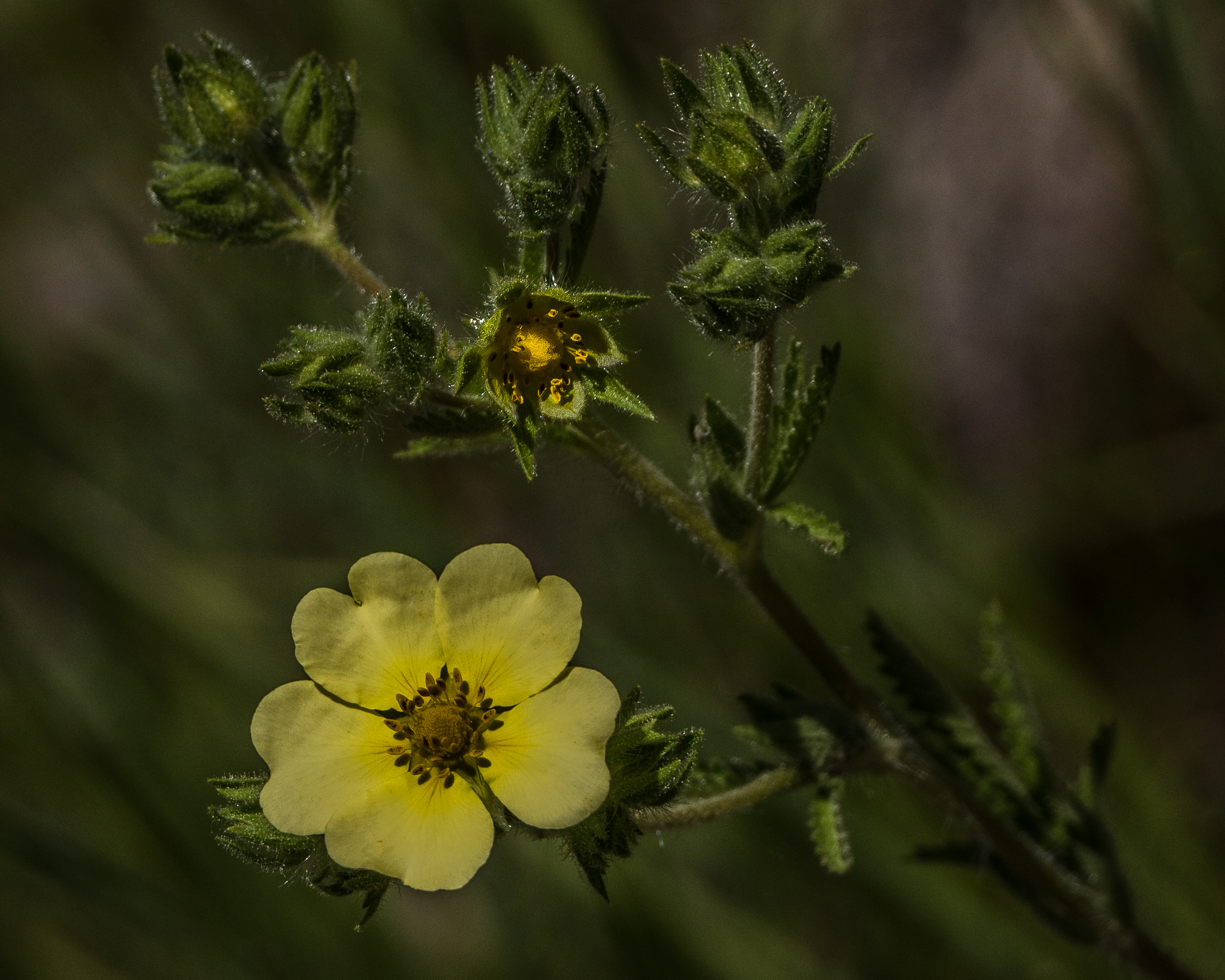
Common cinquefoil …

This Sheep Laurel is blooming much later than the ones along Shebeshekong road.

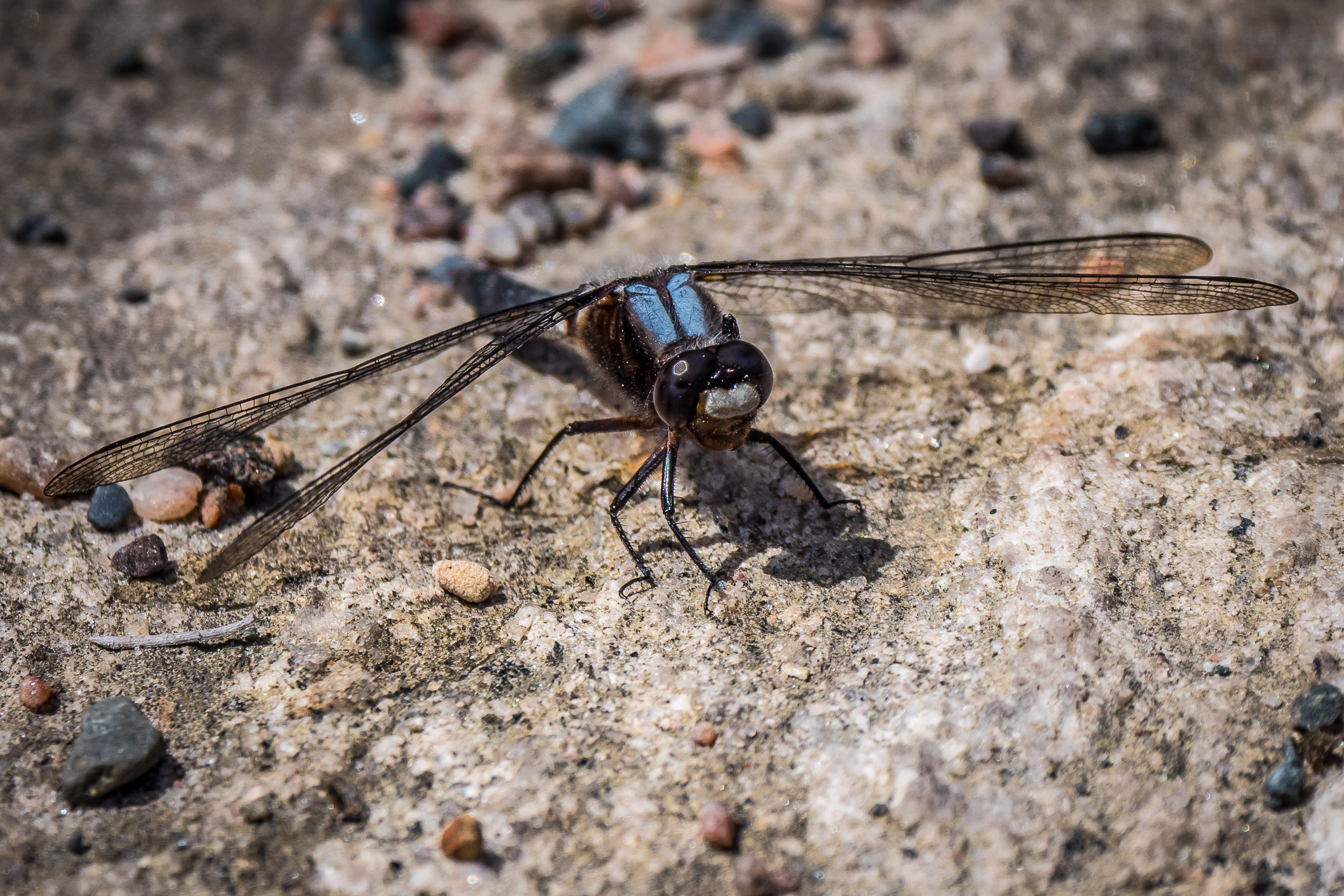
Two Chalk fronted corporals … who, “readily approach humans to feed on the mosquitoes and biting flies that humans attract.”

Female above

Male below…

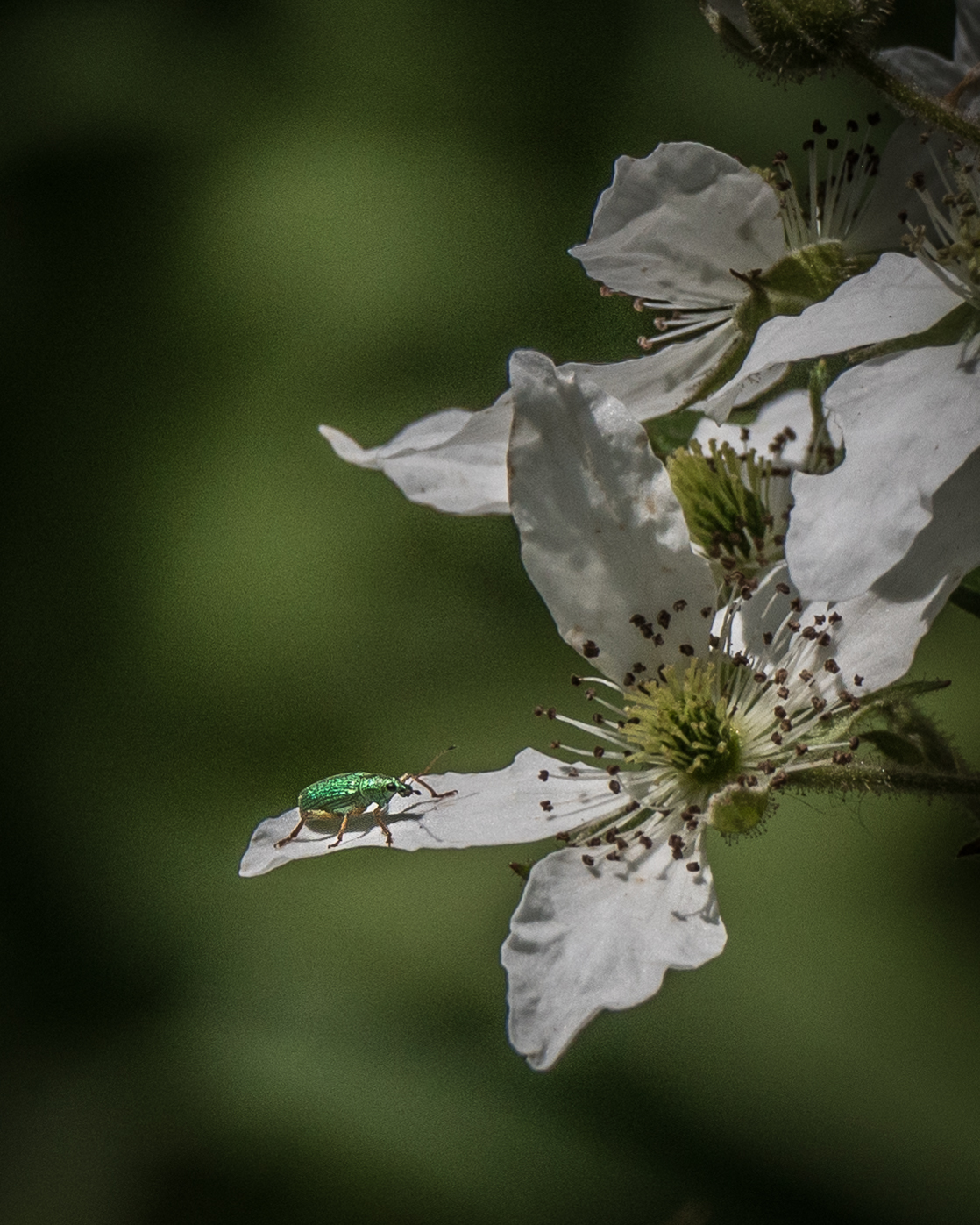
Pretty green bug on petals of blackberry flowers …

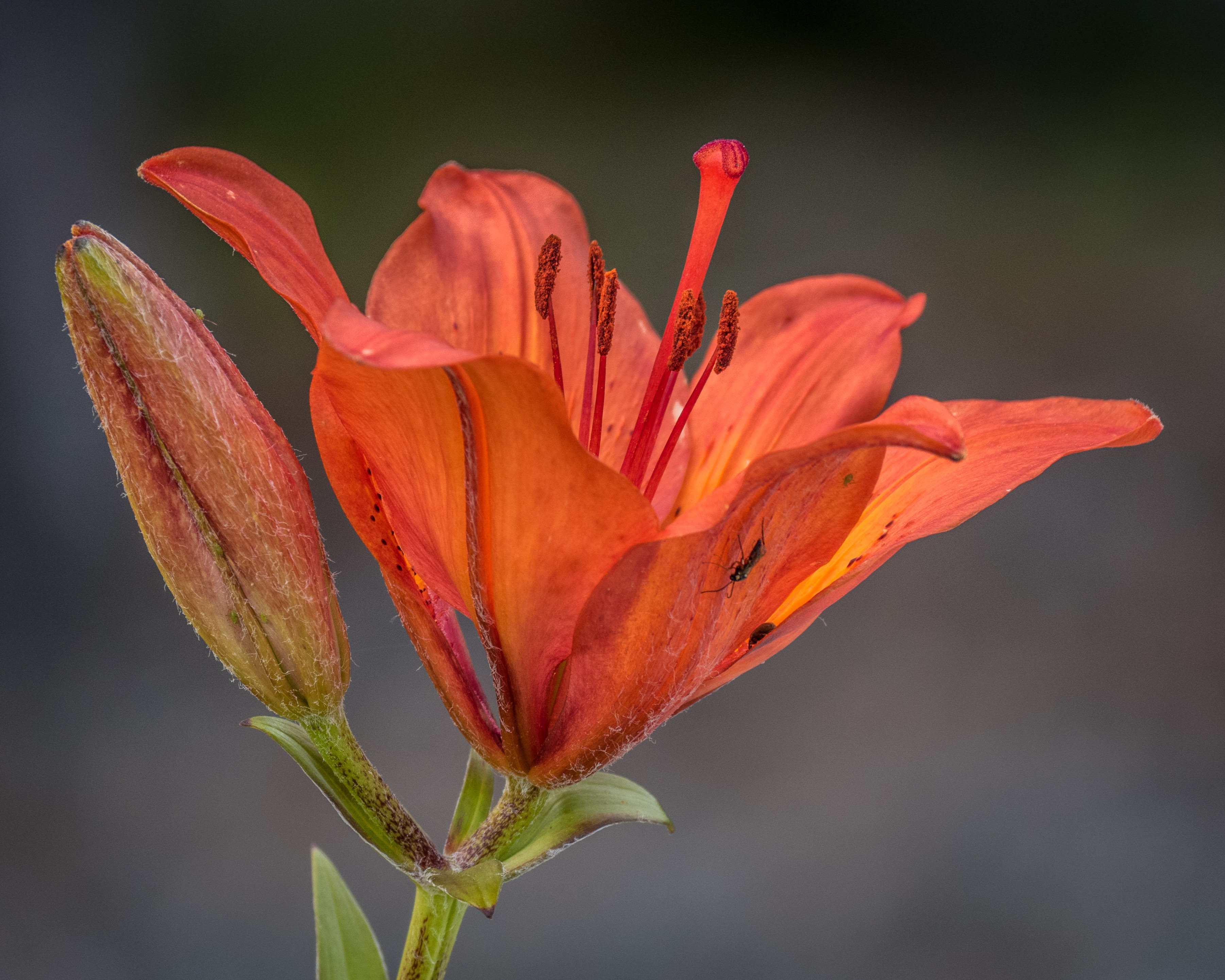
Back in Britt, the lilies in Diana’s flower garden are starting to bloom, to be resplendent on Canada Day.

And a Painted Lady on her  (Diana’s) walkway…

This is a real feast:  http://www.randysnaturephotography.com/butterfly_and_insect_index.htm

And it is a great reference for identifying most of the little critters we see in the air, foraging on flowers, holding on to perches and laying eggs all around us.


Worth looking at:  https://www.chelseagreen.com/blogs/oxeye-daisy/

Save

Save